
Orinoco Crocodile
Crocodylus intermedius
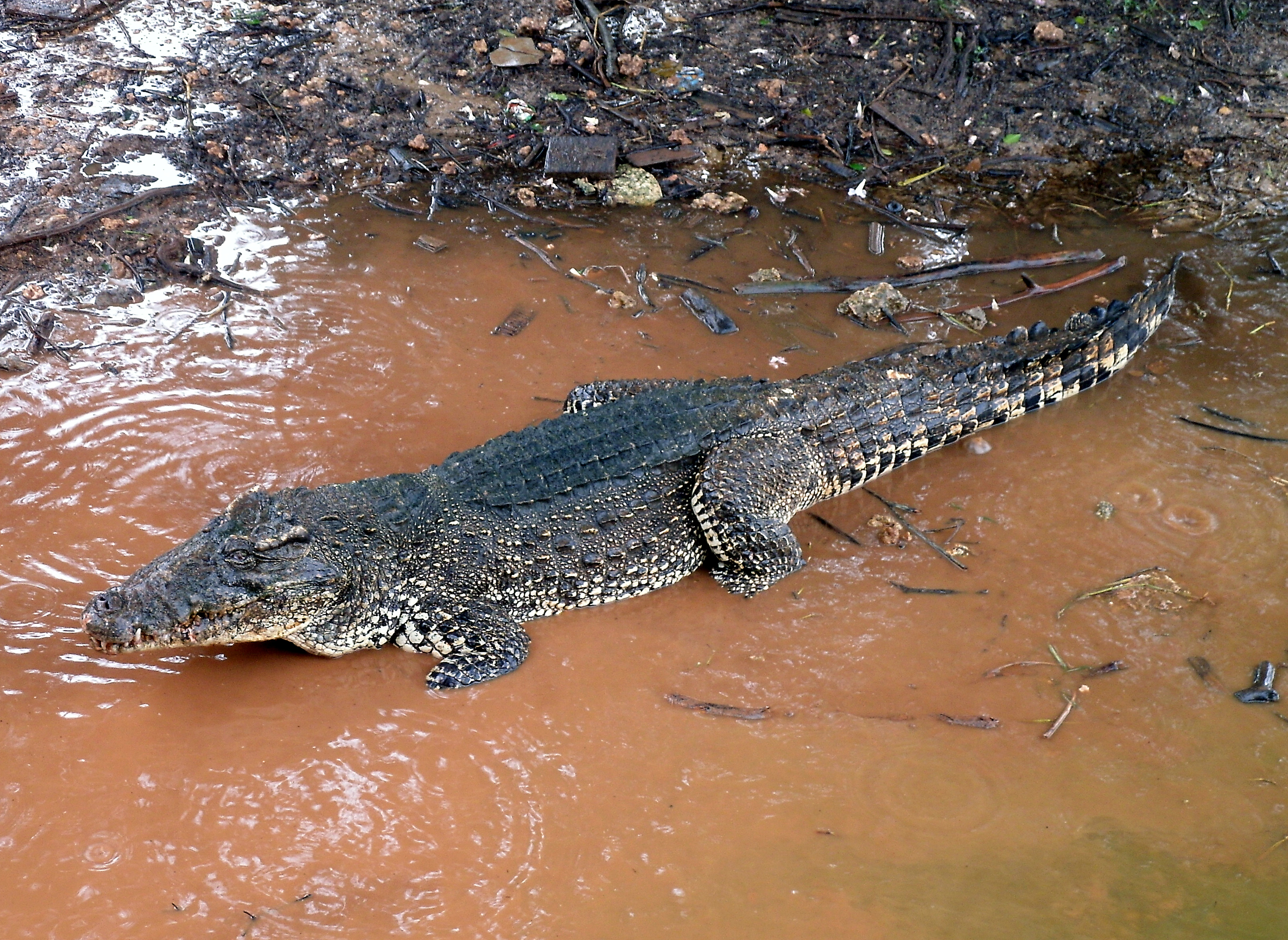
Photo: Wikimedia Commons (CC) via https://en.wikipedia.org/wiki/Orinoco_crocodile
Overview
The Orinoco crocodile is a critically endangered crocodile which can only be found in the Orinoco river basin in Venezuela and Colombia. Extensively hunted for their skins in the 19th and 20th centuries, it is one of the most endangered species of crocodiles. It is a very large species of crocodilian; males have been reported up to 6.8 m in the past, weighing over 900 kg (2,000 lb), but such sizes do not exist today, 5.2 m being a more widely accepted maximum size.
A large male today may attain 4.2 m in length and can weigh up to 450 kg (1,000 lb), while females are substantially smaller with the largest likely to weigh around 225 kg (496 lb). Sexual dimorphism is not as profound as in other crocodilian species. The coloration is light even in adults.
The Orinoco crocodile has suffered catastrophic population declines primarily due to commercial hunting for its valuable hide, which peaked in the mid-20th century and reduced populations by over 99%. Habitat degradation from cattle ranching, agriculture, and dam construction has fragmented remaining populations along the Orinoco River basin. Human encroachment and illegal hunting continue to threaten recovery efforts, while climate change poses additional risks to nesting beaches and water levels in critical breeding areas.
Habitat
The Orinoco crocodile inhabits freshwater rivers, tributaries, and seasonal wetlands throughout the Orinoco River basin in Venezuela and Colombia. It prefers slow-moving waters with sandy banks suitable for nesting, including oxbow lakes, flooded savannas, and river channels with adequate fish populations.
Conservation measures underway
Other threatened species in CROCODYLIDAE


Threatened in Colombia
Frequently asked questions
Why is Orinoco Crocodile classified as Critically Endangered?
Where does Orinoco Crocodile live?
What are the main threats to Orinoco Crocodile?
Get weekly conservation intelligence
One short digest a week of the most striking species and country data we ship, plus breaking conservation news paired with our database where it matters.
Free, no spam. One-click unsubscribe in every email.