
Milk Shark
Rhizoprionodon acutus
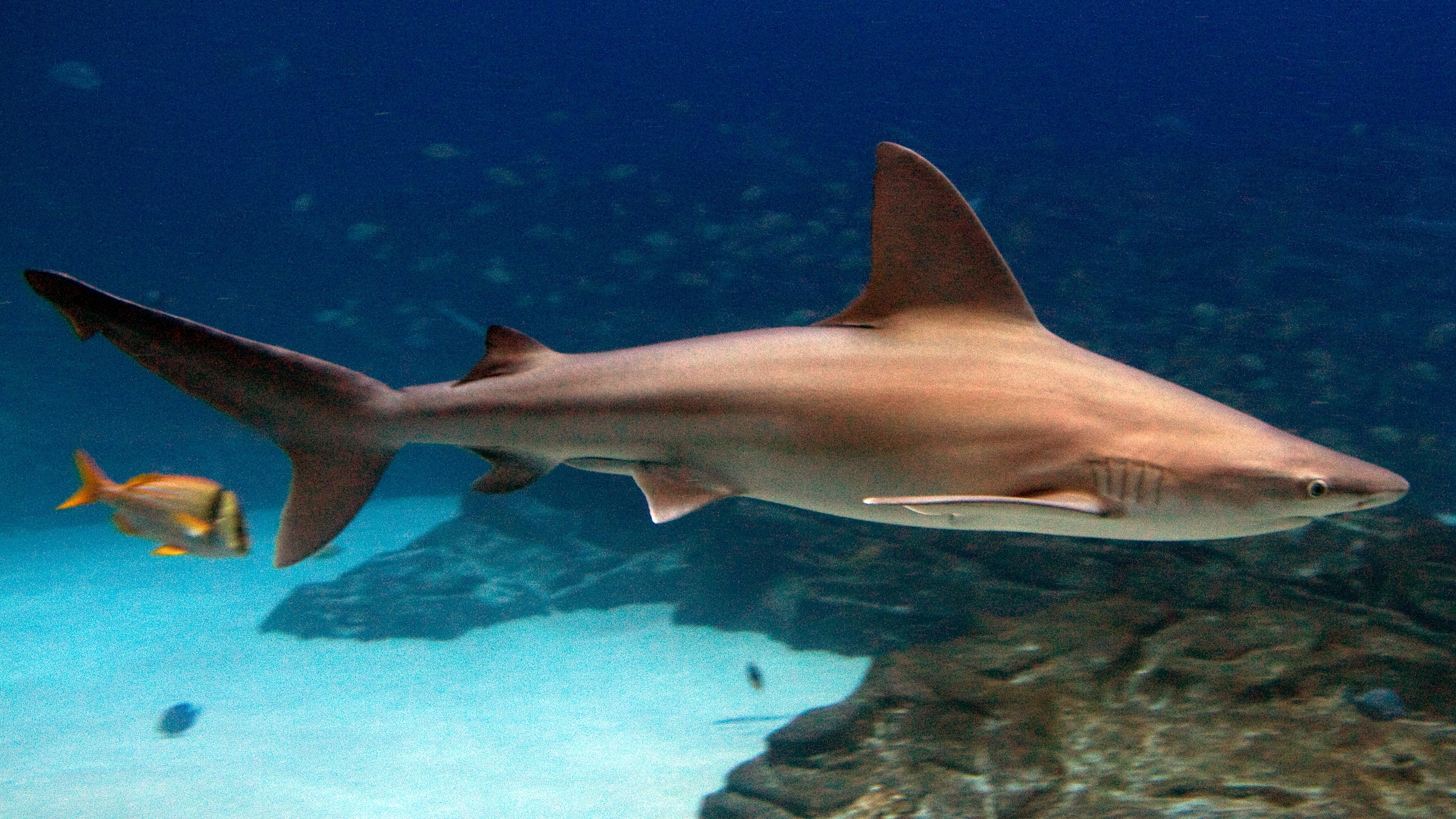
Photo: Wikimedia Commons (CC) via https://en.wikipedia.org/wiki/Milk_shark
Overview
A slender, gray-bronze shark reaching up to 1.5 meters in length, this species is easily recognized by its long, pointed snout, large eyes, and small size relative to other requiem sharks. It is a fast-swimming, opportunistic predator feeding mainly on small bony fishes, cephalopods, and crustaceans, playing a role as a mid-level predator in coastal food webs, helping regulate prey populations in the nearshore ecosystems it inhabits. Reproduction is viviparous, with females giving birth to small litters after a gestation period, typically in shallow coastal nursery areas.
This species has one of the widest distributions of any carcharhinid, found throughout tropical and warm-temperate coastal waters across the Atlantic, Indian, and Pacific Oceans. It occupies marine neritic and occasionally estuarine or freshwater-influenced habitats, generally staying close to shorelines, continental shelves, and river mouths, from West Africa to the Arabian Peninsula, South and Southeast Asia, East Asia, Australia, and parts of South America.
The primary threat is sustained fishing pressure, both targeted and as bycatch, in artisanal and commercial fisheries across much of its range. Because it frequents shallow coastal waters heavily used by fishing fleets, it is highly exposed to gillnets, longlines, and trawls, and its meat and fins are commonly retained for local consumption and trade.
Conservation measures remain limited and inconsistent across its range, with some countries applying general shark fishing regulations or protected area measures that indirectly benefit coastal populations, though species-specific management is largely absent.
Given ongoing, largely unregulated fishing throughout its coastal range, population trends are declining, and without stronger management the species is likely to continue experiencing reductions in abundance across much of its distribution.
The Milk Shark is mainly threatened by ongoing fishing activity, being caught both intentionally and as accidental bycatch in nets and on lines aimed at other species. This fishing pressure occurs throughout its range in coastal and nearshore waters. This threat remains ongoing and continues without signs of easing.
Habitat
Conservation measures underway
Other threatened species in CARCHARHINIDAE

Threatened in Angola



Frequently asked questions
Why is Milk Shark classified as Vulnerable?
Where does Milk Shark live?
What are the main threats to Milk Shark?
Get weekly conservation intelligence
One short digest a week of the most striking species and country data we ship, plus breaking conservation news paired with our database where it matters.
Free, no spam. One-click unsubscribe in every email.