Lord Howe Abalone
Haliotis rubiginosa
Overview
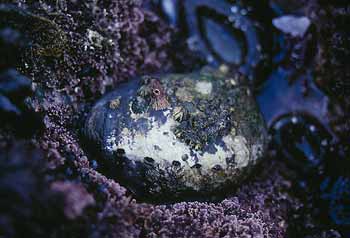
Haliotis rubiginosa is a marine gastropod in the family Haliotidae, distinguished by its flattened, ear-shaped shell with a row of respiratory pores along its outer edge. Like other abalone, it grips hard substrates with a broad muscular foot and grazes on algae using a rasping radula, playing a role in controlling algal growth on rocky reef surfaces. As a slow-moving herbivore, it also serves as a prey item for various reef predators, contributing to nutrient cycling within its ecosystem.
The species occupies shallow marine neritic waters, generally attached to rocky substrates where wave action and water flow support algal growth. Its known range spans parts of the western Pacific, including Australia, Indonesia, Kiribati, Niue, and Vanuatu, with populations closely tied to specific reef and coastal rock habitats.
The species faces pressure from historical and ongoing harvesting, which has reduced local populations of a naturally slow-growing, long-lived mollusc with limited capacity for rapid recovery. Disease and problematic native species add further mortality risk, while habitat shifting, temperature extremes, and increasingly severe storms and flooding degrade the rocky reef environments it depends on. Unspecified pollution inputs compound these pressures, particularly in nearshore zones exposed to runoff and coastal development.
Conservation actions specific to this species are not well documented, though it would likely benefit from general marine protected area frameworks and fisheries regulations applicable in its range countries. Population trend data remain unknown, limiting the ability to assess recovery or ongoing decline.
Given its Critically Endangered status, combined multiple ongoing threats, and lack of clear population monitoring, the species' outlook remains uncertain, with continued vulnerability unless harvesting pressures and habitat degradation are addressed.
The Lord Howe Abalone faces ongoing pressure from harvesting by people, along with native predators or diseases that affect its populations. Its habitat is also being altered, and it is exposed to extreme water temperatures, storm and flood damage, and unspecified pollution. These combined threats currently appear to be stable rather than clearly worsening or improving.
Habitat
Conservation measures underway
Other threatened species in HALIOTIDAE


Threatened in Australia
Frequently asked questions
Why is Lord Howe Abalone classified as Critically Endangered?
Where does Lord Howe Abalone live?
What are the main threats to Lord Howe Abalone?
Get weekly conservation intelligence
One short digest a week of the most striking species and country data we ship, plus breaking conservation news paired with our database where it matters.
Free, no spam. One-click unsubscribe in every email.