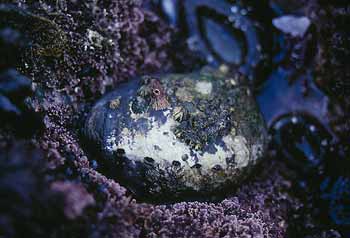
Black Abalone
Haliotis cracherodii
Photo: Wikimedia Commons (CC) via https://en.wikipedia.org/wiki/Haliotis_cracherodii
Overview
Species Profile
The black abalone is a large marine gastropod distinguished by a smooth, dark blue-black to greenish shell reaching up to 20 cm in length, with a relatively unpitted surface compared to other abalone species. It is a herbivorous grazer that feeds primarily on drift algae and kelp, using a muscular foot to adhere tightly to rocky substrate. As a grazer, it plays a role in structuring intertidal algal communities and serves as a food source for sea stars, octopuses, and historically, sea otters.
Black abalone inhabit rocky intertidal and shallow subtidal zones along the eastern Pacific coast, historically ranging from northern California to Baja California, Mexico, with additional occurrences noted in Canada, Australia, Jamaica, and other coastal areas. They favor crevices and rock formations exposed to wave action.
The species has declined sharply due to withering syndrome, a bacterial disease that impairs digestion and causes mass die-offs, compounded by ocean warming and marine heatwaves that increase disease susceptibility. Historical overharvesting for food, illegal poaching, and habitat degradation from coastal development, pollution, and kelp forest decline have further reduced populations. Ocean acidification poses an additional long-term physiological stressor.
Conservation efforts include harvest bans and moratoriums in the United States, listing under the U.S. Endangered Species Act, population monitoring, disease research, and habitat protection within marine protected areas.
Despite these measures, black abalone populations continue to decline across much of their range, with many historical sites showing severe depletion or local extirpation. The species remains at high risk, with recovery constrained by ongoing disease pressure and warming ocean conditions.
Black Abalone are being wiped out mainly by a bacterial illness called withering syndrome, which has already killed off most populations, while warming oceans, marine heatwaves, and the loss of kelp forests they depend on for food and shelter are making it even harder for them to survive. They also face pressure from illegal poaching, pollution, coastal development, and other human activities near the shore. Overall, these threats appear to be intensifying, particularly as ocean warming and disease continue to spread.
Habitat
Black abalone inhabit rocky intertidal zones and shallow subtidal areas along the Pacific coast, typically found in crevices and under rocks in the mid to low intertidal zone. They prefer areas with strong wave action and abundant coralline algae and kelp, which serve as their primary food sources.
Conservation measures underway
Other threatened species in HALIOTIDAE


Threatened in Canada
Frequently asked questions
Why is Black Abalone classified as Critically Endangered?
Where does Black Abalone live?
What are the main threats to Black Abalone?
Get weekly conservation intelligence
One short digest a week of the most striking species and country data we ship, plus breaking conservation news paired with our database where it matters.
Free, no spam. One-click unsubscribe in every email.