Lesser Featherwort
Plagiochila porelloides
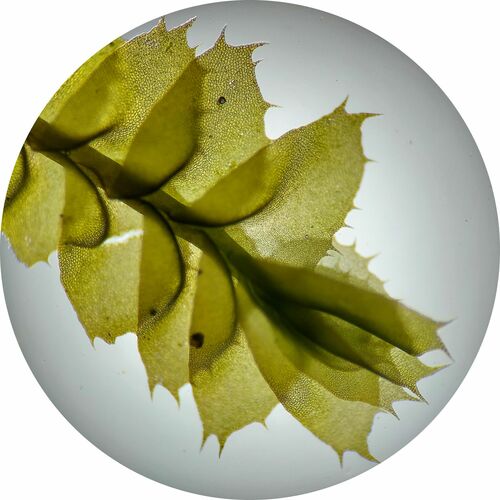
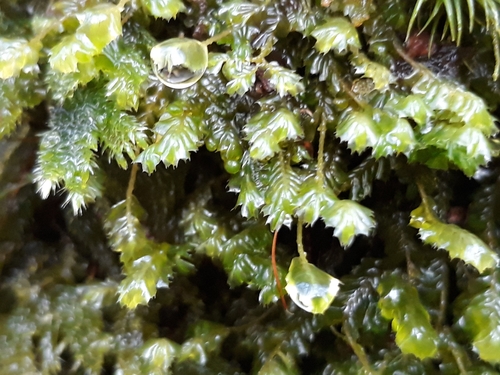
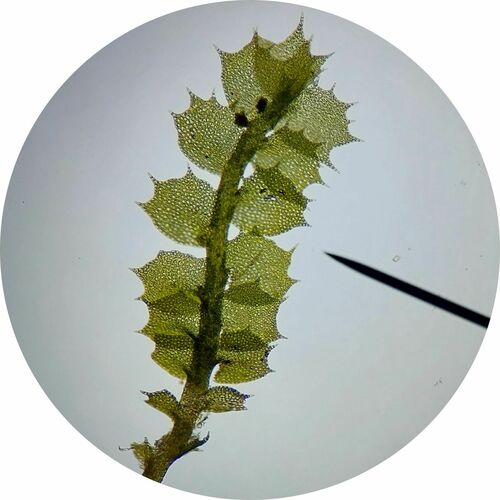
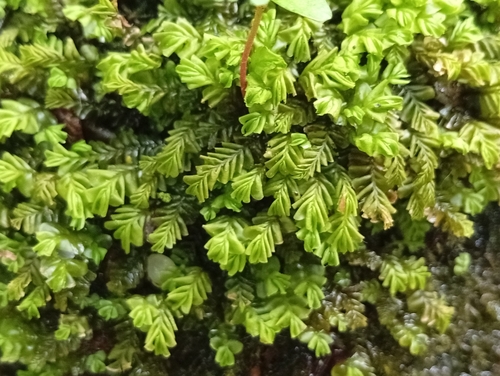
Lesser Featherwort (Plagiochila porelloides) is a delicate leafy liverwort characterized by its distinctive feather-like branching pattern and overlapping, translucent leaves that create intricate geometric arrangements. This small bryophyte plays a crucial ecological role in maintaining moisture levels and providing microhabitat for invertebrates in its specialized environments.
60
Countries
Taxonomy & Classification
Kingdom
Plantae
Phylum
Marchantiophyta
Class
Jungermanniopsida
Order
Jungermanniales
Family
Plagiochilaceae
Genus
Plagiochila
Lesser Featherwort belongs to the family Plagiochilaceae, order Jungermanniales, within the Jungermanniopsida class.
Species Profile
Lesser Featherwort (Plagiochila porelloides) is a delicate leafy liverwort characterized by its distinctive feather-like branching pattern and overlapping, translucent leaves that create intricate geometric arrangements. This small bryophyte plays a crucial ecological role in maintaining moisture levels and providing microhabitat for invertebrates in its specialized environments.
Plagiochila porelloides, the Lesser Featherwort, faces severe population decline primarily due to habitat destruction and degradation of its specialized bryophyte communities. Climate change and air pollution are exacerbating the loss of suitable microhabitats required for this sensitive liverwort species. The species' extremely limited distribution and specific ecological requirements make it particularly vulnerable to environmental changes.
Key Facts
Habitat & Distribution
Lesser Featherwort thrives in humid, shaded environments on decaying logs, moss-covered rocks, and the bases of trees in old-growth forests. It requires consistently moist conditions with high humidity and filtered light, typically found in undisturbed woodland areas with stable microclimates.
Threats
IUCN Red List: Critically Endangered
Plagiochila porelloides, the Lesser Featherwort, faces severe population decline primarily due to habitat destruction and degradation of its specialized bryophyte communities. Climate change and air pollution are exacerbating the loss of suitable microhabitats required for this sensitive liverwort species. The species' extremely limited distribution and specific ecological requirements make it particularly vulnerable to environmental changes.
Air pollution and acid deposition
Climate change and altered precipitation patterns
Habitat destruction and fragmentation
Loss of host trees and substrate degradation
Collection pressure for scientific purposes
Found in 60 Countries
National vs Global Threat Status
How this species is assessed at the national level compared to its IUCN global status (CR).
| Country | National Status | Global Status | Comparison |
|---|---|---|---|
| EU | LCLeast Concern | CRCritically Endangered | Lower local risk |
| EU | LCLeast Concern | CRCritically Endangered | Lower local risk |
National Red List data sourced from the National Red List Project (nationalredlist.org, ZSL) and country-specific Red List authorities.
Community Sightings
Report a sightingNo community sightings yet. Be the first to report!
Sources & Attribution
How to Cite
IUCN: IUCN (2025). The IUCN Red List of Threatened Species. Version 2025-1. Available at: https://www.iucnredlist.org. doi:10.2305/IUCN.UK.2025-1.RLTS
GBIF: GBIF.org (2025). GBIF Home Page. Available at: https://www.gbif.org
National Red Lists: ZSL (2025). National Red List. Zoological Society of London. Available at: https://www.nationalredlist.org
This page: SpeciesRadar (2025). Lesser Featherwort (Plagiochila porelloides). SpeciesRadar: Intelligence for Earth's Biodiversity. Available at: https://speciesradar.org/species/lesser-featherwort