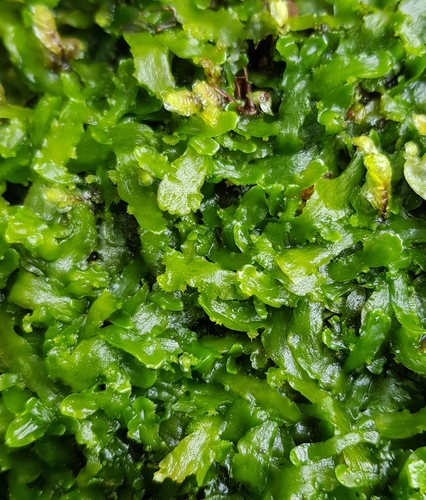
large greasewort
Aneura maxima
Photo: Photo: (c) Helen Waterman, some rights reserved (CC BY), uploaded by Helen Waterman
Overview
The large greasewort (Aneura maxima) is a thalloid liverwort in the family Aneuraceae, distinguished from its more common relatives by its notably broader, fleshier ribbon-like thallus, which lacks the midrib and leaf structures typical of leafy liverworts. Its tissue is a dull olive-green to dark green, often appearing translucent and gelatinous when saturated, a texture that helps it retain moisture in the humid, shaded microhabitats it depends on. Aneura maxima is classified as Critically Endangered (CR) by the IUCN, reflecting an extremely restricted distribution and ongoing vulnerability to habitat disturbance.
The species is known from a small number of localities associated with consistently damp, sheltered ground such as streambank seepage zones, wet rock faces, and decaying wood in undisturbed forest understories, where stable humidity and low light are essential for its survival. Because bryophytes of this kind lack vascular tissue and any protective cuticle, they are acutely sensitive to fluctuations in moisture and temperature, making them reliable indicators of ecosystem stability. Population trend data for Aneura maxima remains unknown, a common challenge for small, easily overlooked liverworts that receive limited survey attention compared to vascular plants.
Despite this uncertainty, there is a meaningful conservation note: renewed botanical interest in cryptogamic diversity has led to targeted bryophyte surveys in several regions where the species has historically been recorded, improving the odds that overlooked populations will be documented and factored into habitat protection planning. Continued inventory work, paired with safeguarding of intact riparian and old-growth forest microhabitats, offers a realistic pathway toward better understanding and ultimately stabilizing this liverwort's status. Its persistence depends heavily on maintaining the specific hydrological and microclimatic conditions of its narrow habitat niche, underscoring the importance of protecting not just known sites but the surrounding forest structure that buffers them from desiccation and disturbance.
Aneura maxima faces significant pressure from the loss and degradation of the shaded, consistently moist microhabitats it requires, particularly where forestry operations or land clearing alter canopy cover and disrupt local hydrology. Because the species relies on stable humidity near seepages and decaying wood, even localized drainage changes or streambank disturbance can eliminate suitable conditions at a site. Its restricted range and small number of known populations make it especially susceptible to any single disturbance event, leaving little buffer against habitat loss.
Habitat
Large greasewort grows in humid, shaded microhabitats such as streambank seepage areas, wet rock faces, and decaying wood within undisturbed forest understories, where stable moisture levels are critical to its survival.
Other threatened species in Aneuraceae
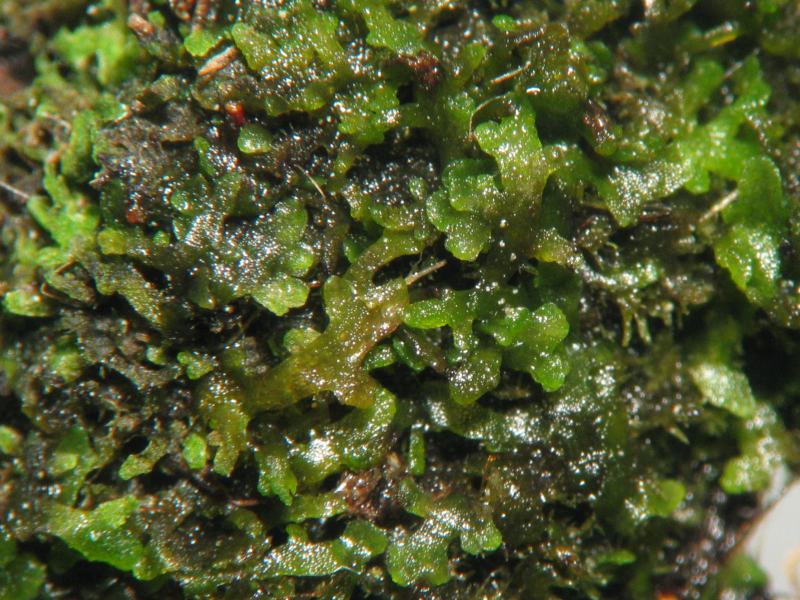
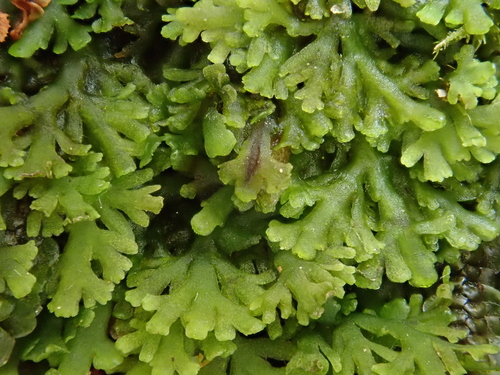
Threatened in Australia
Frequently asked questions
Why is large greasewort classified as Critically Endangered?
Where does large greasewort live?
What are the main threats to large greasewort?
Get weekly conservation intelligence
One short digest a week of the most striking species and country data we ship, plus breaking conservation news paired with our database where it matters.
Free, no spam. One-click unsubscribe in every email.