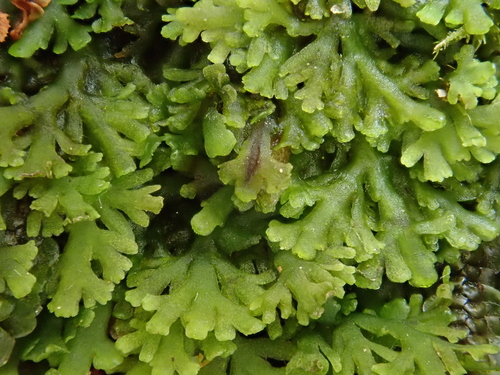
Comb Liverwort
Riccardia multifida
Photo: iNaturalist: (c) Christian Berg, some rights reserved (CC BY), uploaded by Christian Berg
Overview
Riccardia multifida is a species of liverwort belonging to the family Aneuraceae.
Delicate Germanderwort faces significant threats from habitat degradation and loss due to pollution, drainage, and disturbance of its specialized wetland environments. Climate change poses additional risks through altered precipitation patterns and temperature regimes that affect the moisture-dependent ecosystems this bryophyte requires. The species' limited distribution and specific habitat requirements make it particularly vulnerable to environmental changes.
Habitat
This liverwort species inhabits moist, shaded environments including wet rocks, stream banks, bog margins, and damp soil in woodlands and wetland areas. It typically occurs in acidic to neutral substrates with consistent moisture availability and low light conditions.
Other threatened species in Aneuraceae
Frequently asked questions
Why is Comb Liverwort classified as Vulnerable?
Where does Comb Liverwort live?
What are the main threats to Comb Liverwort?
Get weekly conservation intelligence
One short digest a week of the most striking species and country data we ship, plus breaking conservation news paired with our database where it matters.
Free, no spam. One-click unsubscribe in every email.