
Kowari
Dasyuroides byrnei
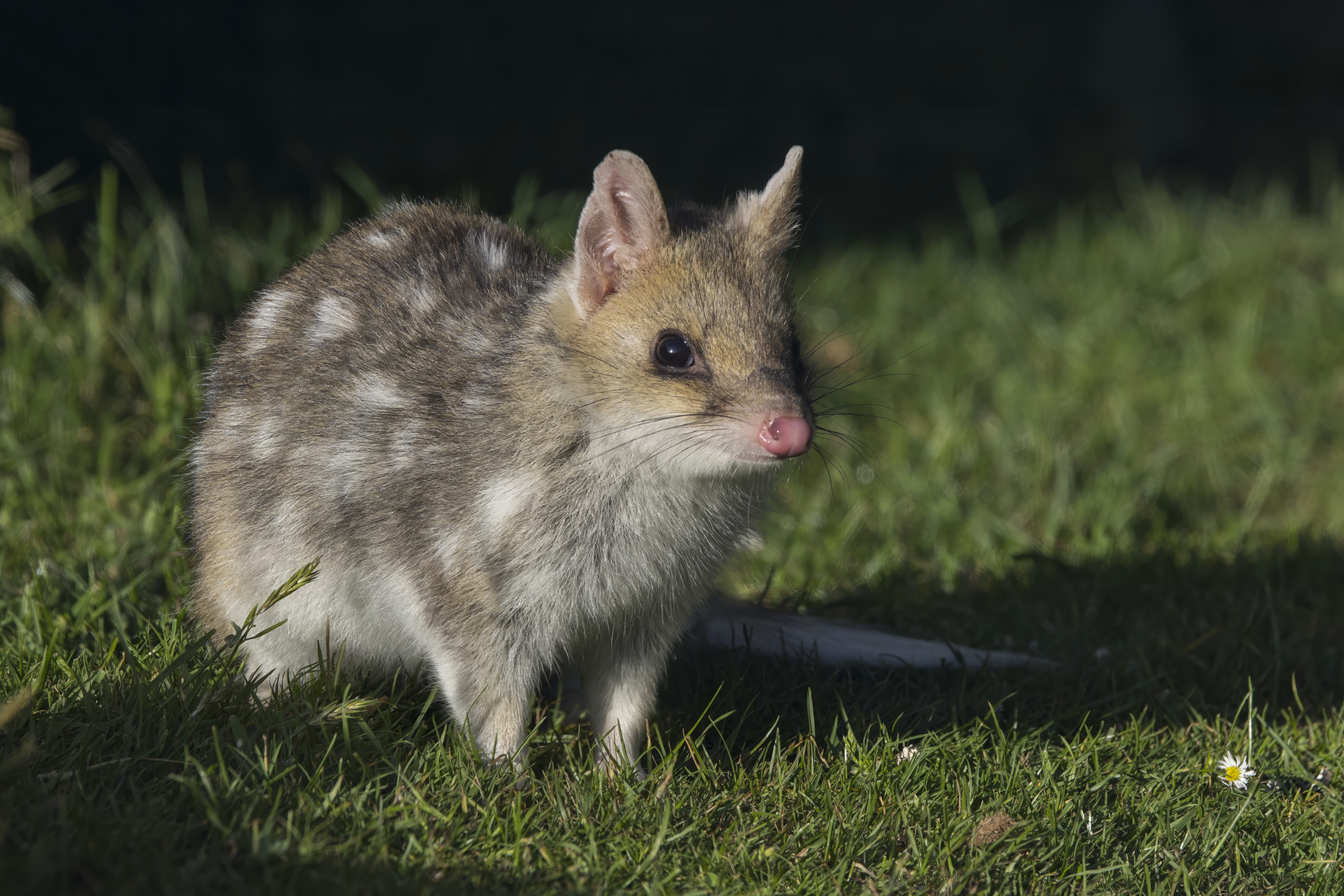
Photo: Wikimedia Commons (CC) via https://en.wikipedia.org/wiki/Kowari
Overview
The kowari is a small carnivorous marsupial with sandy-brown fur, a pale underside, and a distinctive dark, brush-tipped tail. Adults weigh roughly 70 to 140 grams and are primarily nocturnal, sheltering in burrows during the day to avoid extreme temperatures. They are opportunistic predators, feeding on insects, small reptiles, and rodents, and in turn serve as prey for larger predators, making them a component of arid ecosystem food webs and a natural check on invertebrate and small vertebrate populations.
This species is restricted to a limited area of central Australia, spanning parts of Queensland and South Australia. It inhabits arid shrubland and stony or gibber plains, often near ephemeral inland watercourses and wetlands that provide seasonal resources in an otherwise harsh environment.
The kowari faces ongoing pressure from livestock farming and ranching, which degrades and fragments its habitat through grazing and associated land-use changes. Invasive species, particularly introduced predators such as feral cats and foxes, prey on kowaris directly and compete for resources. Habitat shifting and alteration, linked to changing land management and climatic variability, further reduce the availability of suitable burrowing sites and prey.
Conservation efforts include habitat monitoring, research into population distribution and ecology, and predator control programs in parts of its range aimed at reducing feral cat and fox impacts. Some populations occur within protected or monitored pastoral lands where conservation-compatible grazing practices are being explored.
The population trend is currently decreasing, and the species is classified as Vulnerable. Continued habitat degradation and predation pressure suggest that without sustained management intervention, the kowari's range and numbers are likely to remain under strain in the near term.
The Kowari faces ongoing pressure from cattle and sheep grazing that damages its desert habitat, competition and predation from introduced animals like cats and foxes, and changes to its grassland and desert habitat driven by factors such as shifting fire patterns and climate conditions. These threats are currently considered stable but persistent, continuing at their present level rather than clearly worsening or improving.
Habitat
Other threatened species in DASYURIDAE
Threatened in Australia
Frequently asked questions
Why is Kowari classified as Vulnerable?
Where does Kowari live?
What are the main threats to Kowari?
Get weekly conservation intelligence
One short digest a week of the most striking species and country data we ship, plus breaking conservation news paired with our database where it matters.
Free, no spam. One-click unsubscribe in every email.