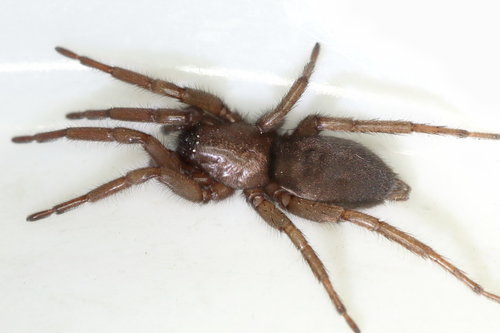
kortspriet korsetzweefvlieg
Neoascia geniculata
The kortspriet korsetzweefvlieg (Neoascia geniculata) is a small hoverfly species characterized by its distinctive short antennae and yellow-black banded abdomen with a characteristic 'corseted' appearance. Adults are important pollinators of wildflowers, while their larvae develop in decaying organic matter, contributing to nutrient cycling in wetland ecosystems.
16
Countries
Taxonomy & Classification
Kingdom
Animalia
Phylum
Arthropoda
Class
Insecta
Order
Diptera
Family
Syrphidae
Genus
Neoascia
kortspriet korsetzweefvlieg belongs to the family Syrphidae, order Diptera, within the Insecta class.
Species Profile
The kortspriet korsetzweefvlieg (Neoascia geniculata) is a small hoverfly species characterized by its distinctive short antennae and yellow-black banded abdomen with a characteristic 'corseted' appearance. Adults are important pollinators of wildflowers, while their larvae develop in decaying organic matter, contributing to nutrient cycling in wetland ecosystems.
Neoascia geniculata is declining primarily due to habitat loss and degradation of wetland ecosystems across its European range. Agricultural intensification, urban development, and changes in water management practices have significantly reduced the availability of suitable breeding and foraging habitats for this specialized hoverfly species.
Key Facts
Habitat & Distribution
Neoascia geniculata inhabits reed beds, wet meadows, and marshy areas with slow-moving or standing water where organic matter accumulates. The species requires proximity to diverse flowering plants for adult feeding and specific water chemistry conditions for larval survival in semi-aquatic environments.
Threats
IUCN Red List: Endangered
Neoascia geniculata is declining primarily due to habitat loss and degradation of wetland ecosystems across its European range. Agricultural intensification, urban development, and changes in water management practices have significantly reduced the availability of suitable breeding and foraging habitats for this specialized hoverfly species.
Agricultural intensification and pesticide use
Wetland habitat loss and degradation
Climate change affecting wetland hydrology
Urban development and infrastructure expansion
Water management changes and drainage
Found in 16 Countries
National vs Global Threat Status
How this species is assessed at the national level compared to its IUCN global status (EN).
| Country | National Status | Global Status | Comparison |
|---|---|---|---|
| EU | LCLeast Concern | ENEndangered | Lower local risk |
| EU | LCLeast Concern | ENEndangered | Lower local risk |
National Red List data sourced from the National Red List Project (nationalredlist.org, ZSL) and country-specific Red List authorities.
Community Sightings
Report a sightingNo community sightings yet. Be the first to report!
Sources & Attribution
How to Cite
IUCN: IUCN (2025). The IUCN Red List of Threatened Species. Version 2025-1. Available at: https://www.iucnredlist.org. doi:10.2305/IUCN.UK.2025-1.RLTS
GBIF: GBIF.org (2025). GBIF Home Page. Available at: https://www.gbif.org
National Red Lists: ZSL (2025). National Red List. Zoological Society of London. Available at: https://www.nationalredlist.org
This page: SpeciesRadar (2025). kortspriet korsetzweefvlieg (Neoascia geniculata). SpeciesRadar: Intelligence for Earth's Biodiversity. Available at: https://speciesradar.org/species/kortspriet-korsetzweefvlieg