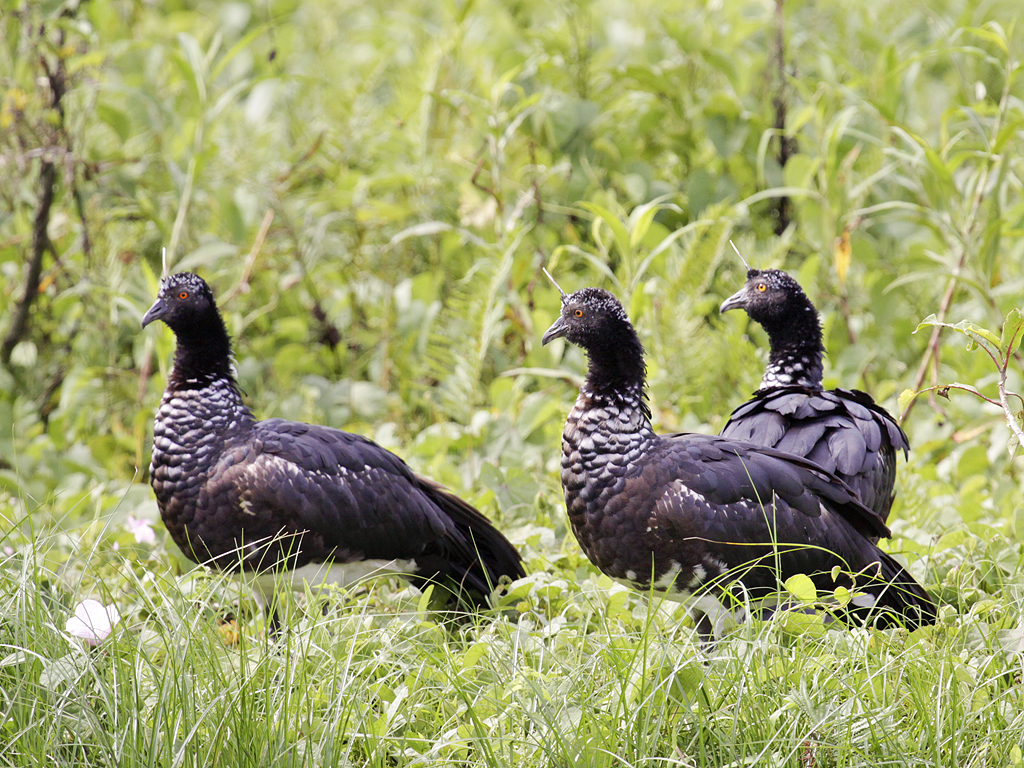
Horned Screamer
Anhima cornuta
Photo: Wikimedia Commons (CC) via https://en.wikipedia.org/wiki/Horned_screamer
Overview
A detailed profile for this species is sourced from the IUCN Red List of Threatened Species as assessments become available.
The Horned Screamer faces mounting pressure from wetland habitat conversion for agriculture and cattle ranching across its South American range. Hunting pressure remains significant in many regions, as these large, conspicuous birds are targeted for food and sport. Water pollution from agricultural runoff and mining activities degrades the aquatic ecosystems essential for their feeding and breeding.
Habitat
Horned Screamers inhabit freshwater wetlands, marshes, and flooded grasslands throughout tropical South America, particularly favoring areas with abundant aquatic vegetation. They require large territories with shallow water bodies for foraging and adjacent trees or elevated perches for roosting and nesting.
Threatened in Argentina

Frequently asked questions
Why is Horned Screamer classified as Vulnerable?
Where does Horned Screamer live?
What are the main threats to Horned Screamer?
Get weekly conservation intelligence
One short digest a week of the most striking species and country data we ship, plus breaking conservation news paired with our database where it matters.
Free, no spam. One-click unsubscribe in every email.