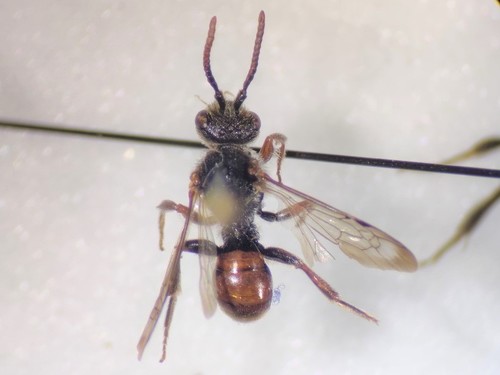
Hawk's-beard Nomad Bee
Nomada facilis
Photo: Photo: (c) Jens Bokelaar, some rights reserved (CC BY-NC), uploaded by Jens Bokelaar
Overview
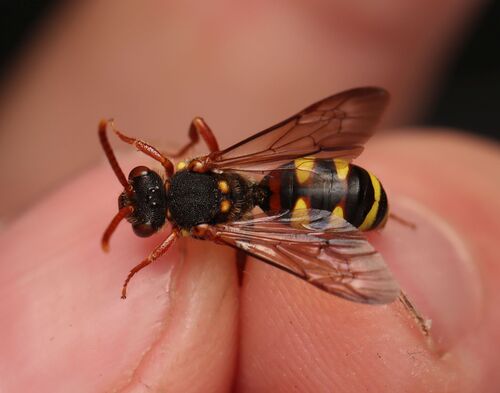
The Hawk's-beard Nomad Bee (Nomada facilis) is a small cuckoo bee species with distinctive yellow and black markings that parasitizes the nests of mining bees in the genus Andrena. This wasp-like bee lacks pollen-collecting structures as females lay their eggs in host nests where larvae consume the host's pollen provisions. As a specialized brood parasite, it plays a unique role in bee community dynamics and serves as an indicator of healthy mining bee populations.
The Hawk's-beard Nomad Bee faces severe decline primarily due to habitat loss and degradation of chalk grasslands and coastal areas where its host species and preferred flowering plants occur. As a cleptoparasitic bee that depends on specific host bee species, it is particularly vulnerable to disruptions in the ecological relationships that sustain both the host populations and the plant communities they depend on.
Habitat
Nomada facilis inhabits flower-rich grasslands, chalk downs, and coastal dunes where its Andrena mining bee hosts establish ground-nesting colonies in sandy or well-drained soils. The species requires diverse wildflower communities, particularly areas with abundant hawk's-beard (Crepis species) and other composite flowers that provide essential nectar resources for adults.
Other threatened species in Apidae
Threatened in Austria
Frequently asked questions
Why is Hawk's-beard Nomad Bee classified as Critically Endangered?
Where does Hawk's-beard Nomad Bee live?
What are the main threats to Hawk's-beard Nomad Bee?
Get weekly conservation intelligence
One short digest a week of the most striking species and country data we ship, plus breaking conservation news paired with our database where it matters.
Free, no spam. One-click unsubscribe in every email.