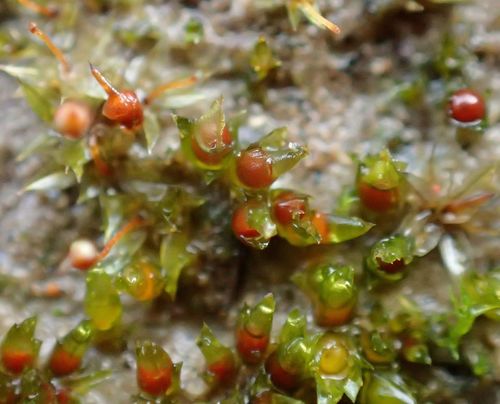
Acaulon mediterraneum
Photo: Photo: (c) George Greiff, some rights reserved (CC BY), uploaded by George Greiff
Overview
Acaulon mediterraneum is a diminutive moss in the family Pottiaceae, so small that its entire plant body rarely exceeds a few millimeters in height. Like other members of its genus, it lacks an obvious stem and produces compact, cushion-like clusters of tiny leaves that hug the soil surface, with spherical spore capsules embedded low among the foliage rather than raised on visible stalks. This inconspicuous growth form makes the species easy to overlook even where it persists, and much of what is known about its biology comes from careful bryological surveys rather than casual observation.
Acaulon mediterraneum is associated with seasonally exposed, often calcareous or clay-rich soils in Mediterranean-type climate zones, where it completes its life cycle during brief windows of moisture before drought sets in. This ephemeral, soil-dependent strategy ties the moss closely to open, disturbed or thinly vegetated ground, habitats that are increasingly rare across its range in southern Europe and the wider Mediterranean basin. The species is currently classified as Critically Endangered (CR) by the IUCN, reflecting a combination of a narrow known distribution, fragmented occurrences, and ongoing pressure on the specialized microhabitats it requires.
Despite this precarious status, there is a meaningful conservation opportunity: because Acaulon mediterraneum depends on identifiable soil and microclimate conditions, targeted protection of remaining open-ground habitat patches and inclusion of bryophyte surveys in regional conservation planning could meaningfully improve its prospects. Renewed taxonomic and field interest in small ephemeral mosses across the Mediterranean region has also improved detection rates in recent years, offering hope that additional populations may yet be documented and safeguarded.
Acaulon mediterraneum is threatened primarily by the loss and alteration of the open, seasonally bare soil patches it depends on, as agricultural intensification, urban expansion, and changes in traditional land use eliminate the disturbed ground this ephemeral moss requires. Its narrow ecological niche leaves it especially vulnerable to shifts in seasonal moisture patterns linked to Mediterranean climate variability, which can shorten the brief growing window the species needs to complete its life cycle. Because populations are small, scattered, and easily overlooked, localized habitat disturbance from development or intensive grazing regimes poses a disproportionate risk to its long-term persistence.
Habitat
Acaulon mediterraneum grows on exposed, often calcareous or clay-rich soils in Mediterranean-type climate regions, favoring open, seasonally disturbed ground where competing vegetation is sparse.
Other threatened species in Pottiaceae

Threatened in Australia
Frequently asked questions
Why is Acaulon mediterraneum classified as Critically Endangered?
Where does Acaulon mediterraneum live?
What are the main threats to Acaulon mediterraneum?
Get weekly conservation intelligence
One short digest a week of the most striking species and country data we ship, plus breaking conservation news paired with our database where it matters.
Free, no spam. One-click unsubscribe in every email.