Blacklip Abalone
Haliotis rubra
Overview
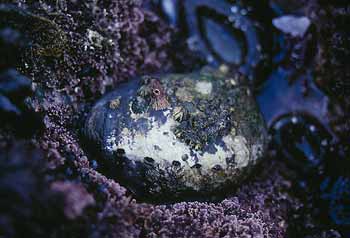
Haliotis rubra is a large marine gastropod characterized by a flattened, ear-shaped shell with a row of respiratory pores along its edge, typically displaying reddish-brown to mottled coloration on the exterior and an iridescent nacreous layer inside. It moves slowly across substrate using a broad muscular foot, which also allows it to clamp tightly onto rocky surfaces. As a herbivorous grazer, it feeds primarily on drift and attached macroalgae, playing a role in regulating algal growth on reef systems and serving as a prey source for various fish, crustaceans, and marine mammals.
This species is found in the coastal waters of southern Australia, inhabiting rocky reef environments within the marine neritic zone, typically in shallow subtidal areas where algal beds are abundant.
Populations are declining due to a combination of pressures. Commercial and recreational fishing has historically placed significant harvest pressure on wild stocks, while the expansion of aquaculture activities has introduced additional ecological competition and disease risk. Non-native species and pathogens have contributed to mortality events, alongside naturally occurring diseases exacerbated by environmental stress.
Rising sea temperatures and marine heatwaves have altered habitat suitability and food availability, and broader habitat shifts linked to changing ocean conditions continue to affect reef ecosystems the species depends on.
Management responses include catch quotas, size limits, and zoned fishery closures across Australian state jurisdictions, along with monitoring programs tracking stock abundance and disease outbreaks. Research into heat-tolerant populations and restocking trials is ongoing in some regions.
Population trends remain downward, and the species' recovery is closely tied to effective fisheries management and the trajectory of marine warming along its range.
Blacklip Abalone faces pressure from ongoing commercial fishing and harvesting, as well as competition and disease risks from farmed abalone operations and invasive species. They're also affected by disease from native species, changing ocean habitats, and extreme water temperatures, with runoff from nearby crop farming adding further strain to their coastal environment. Since all these threats are listed as ongoing rather than reducing, the overall pressure on this species appears to be stable to intensifying rather than easing.
Habitat
Conservation measures underway
Other threatened species in HALIOTIDAE


Threatened in Australia
Frequently asked questions
Why is Blacklip Abalone classified as Vulnerable?
Where does Blacklip Abalone live?
What are the main threats to Blacklip Abalone?
Get weekly conservation intelligence
One short digest a week of the most striking species and country data we ship, plus breaking conservation news paired with our database where it matters.
Free, no spam. One-click unsubscribe in every email.