Honey Abalone
Haliotis melculus
Overview
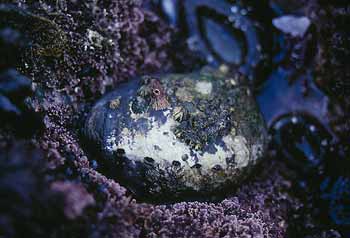
Haliotis melculus is a marine gastropod belonging to the abalone family, characterised by a flattened, ear-shaped shell lined internally with iridescent nacre. Like other abalone, it possesses a muscular foot that clamps tightly to hard substrates, and a row of respiratory pores along the shell margin used for water intake and waste expulsion. It is a herbivorous grazer, feeding primarily on algae and helping regulate algal growth on rocky reef surfaces, a role that contributes to the structural balance of nearshore rocky ecosystems.
As with related species, it is likely slow-growing and long-lived, with limited mobility as an adult.
The species is found in rocky coastal habitats in Australian waters, where it shelters in crevices and under rock ledges in the intertidal and shallow subtidal zones. Its dependence on stable, complex rocky substrate makes it particularly sensitive to changes in coastal habitat structure.
Its Vulnerable status stems from a combination of pressures. Commercial and recreational harvesting has historically reduced local populations, since abalone are highly sought after and slow to recover from overexploitation. Disease and predation pressures from native species add further mortality.
Coastal habitat is also being altered by urban and residential development, while broader shifts in habitat conditions, potentially linked to changing ocean environments, are degrading the rocky reef systems it relies upon.
Conservation responses typically associated with Australian abalone fisheries include catch limits, licensing controls, and monitoring of wild stocks, though species-specific measures for this population are not well documented. Population trend data remains unknown, limiting precise assessment of recovery or decline. Given continuing habitat pressure and harvesting activity, the species' outlook remains uncertain, with ongoing threats suggesting no clear indication of improvement in the near term.
Honey Abalone populations are being reduced by ongoing fishing and harvesting, along with pressure from native predators or diseases that affect their numbers. Their coastal habitats are also being altered as shorelines change and as housing and urban development expand into areas near the coast. Since all of these threats are listed as ongoing, the overall pressure on the species appears to be stable rather than clearly increasing or decreasing.
Habitat
Conservation measures underway
Other threatened species in HALIOTIDAE


Threatened in Australia
Frequently asked questions
Why is Honey Abalone classified as Vulnerable?
Where does Honey Abalone live?
What are the main threats to Honey Abalone?
Get weekly conservation intelligence
One short digest a week of the most striking species and country data we ship, plus breaking conservation news paired with our database where it matters.
Free, no spam. One-click unsubscribe in every email.