Cyrtopogon luteicornis
Overview
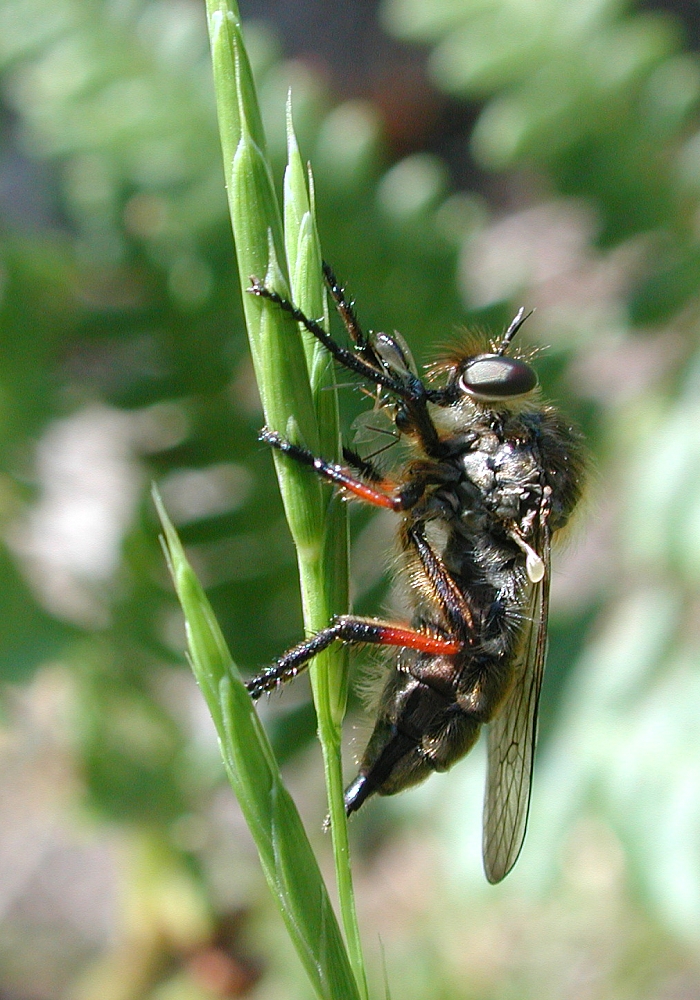
The gulhornad rovfluga (Cyrtopogon luteicornis) is a distinctive robber fly characterized by its yellowish antennae and predatory lifestyle. This aerial hunter captures other flying insects mid-flight, playing a crucial role in controlling populations of flies, mosquitoes, and other small arthropods in its ecosystem.
The gulhornad rovfluga (Cyrtopogon luteicornis) is declining primarily due to habitat loss and degradation of its specialized sandy heath and dune environments. Agricultural intensification, urban development, and changes in land management practices have significantly reduced the availability of suitable breeding and foraging habitats.
Habitat
This species inhabits open woodland edges, meadows with scattered trees, and semi-natural grasslands where it can perch on exposed branches or stems to scan for prey. It requires areas with abundant flowering plants that support diverse insect communities and provide suitable hunting territories.
Other threatened species in Asilidae


Threatened in Finland
Frequently asked questions
Why is Cyrtopogon luteicornis classified as Endangered?
Where does Cyrtopogon luteicornis live?
What are the main threats to Cyrtopogon luteicornis?
Get weekly conservation intelligence
One short digest a week of the most striking species and country data we ship, plus breaking conservation news paired with our database where it matters.
Free, no spam. One-click unsubscribe in every email.