
Beluga
Huso huso
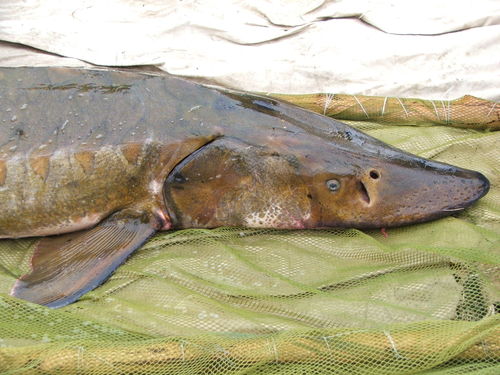
Photo: Photo: Wikimedia Commons, CC BY-SA
Overview
The beluga, also known as the beluga sturgeon or great sturgeon, is a species of sturgeon, which are anadromous fish of the family Acipenseridae of the order Acipenseriformes. It is found primarily in the Caspian and Black Sea basins, and formerly in the Adriatic Sea. Based on maximum size, it is the third-most-massive living species of bony fish.
Heavily fished for the female's valuable roe, known as beluga caviar, wild populations have been greatly reduced by overfishing and poaching, leading IUCN to classify the species as critically endangered.
The Beluga sturgeon faces catastrophic population decline primarily due to overfishing for its highly valuable caviar, which has driven intensive commercial exploitation for over a century. Dam construction across the Caspian Sea basin has blocked critical spawning migrations and fragmented remaining populations. Illegal fishing and poaching continue despite protective measures, while pollution from industrial activities and agricultural runoff degrades water quality in both marine and freshwater habitats.
Habitat
Beluga sturgeon inhabit the Caspian, Black, and Azov seas, spending most of their lives in brackish and marine waters. They migrate into large river systems including the Volga, Danube, and Ural rivers for spawning, requiring access to deep freshwater pools and gravel beds for reproduction.
Conservation measures underway
Other threatened species in ACIPENSERIDAE
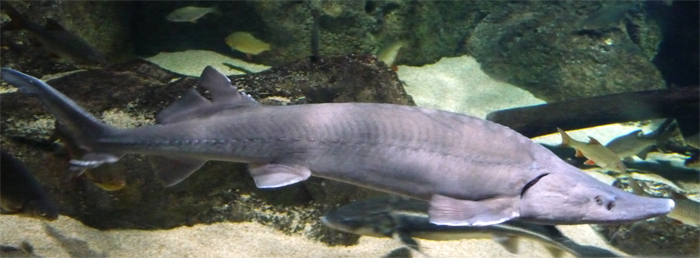


Threatened in Austria
Frequently asked questions
Why is Beluga classified as Critically Endangered?
Where does Beluga live?
What are the main threats to Beluga?
Get weekly conservation intelligence
One short digest a week of the most striking species and country data we ship, plus breaking conservation news paired with our database where it matters.
Free, no spam. One-click unsubscribe in every email.