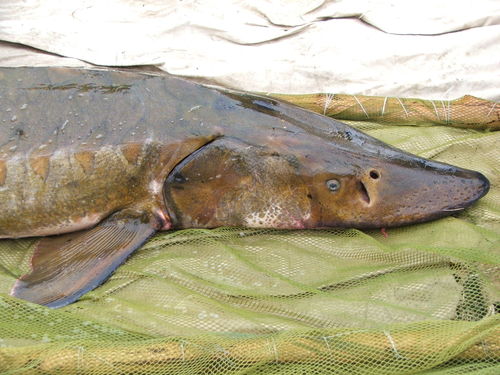
Sakhalin Sturgeon
Acipenser mikadoi
Photo: (c) Alexey Chernyak (Черняк Алексей Леонидович), some rights reserved (CC BY-NC), uploaded by Alexey Chernyak (Черняк Алексей Леонидович)
Overview
Acipenser mikadoi, commonly known as the Sakhalin sturgeon, is a critically endangered anadromous fish species endemic to the northwestern Pacific region. This sturgeon species historically inhabited coastal waters and river systems around Sakhalin Island, the Sea of Okhotsk, and parts of the Japanese archipelago. Like other sturgeons, A.
mikadoi is a long-lived species that matures slowly and migrates between marine and freshwater environments for spawning. The species has experienced severe population declines due to multiple anthropogenic pressures. Overfishing has been a primary driver of decline, as sturgeons are highly valued for their roe (caviar) and meat.
Habitat degradation and loss, particularly the construction of dams and other barriers that impede spawning migrations, have further compromised population recovery. Water pollution and coastal development have also negatively impacted both marine and freshwater habitats critical to the species' life cycle. The species' slow reproductive rate and late sexual maturity make it particularly vulnerable to population pressures and slow to recover from declines.
Conservation efforts for A. mikadoi include fishing restrictions and habitat protection measures in some areas, though enforcement remains challenging. Artificial propagation and restocking programs have been implemented in parts of its range, but success has been limited.
International cooperation between Russia, Japan, and other regional stakeholders is essential for effective conservation of this transboundary species.
The Sakhalin sturgeon faces severe threats from overfishing driven by high commercial value of its caviar and meat. Habitat destruction through dam construction and coastal development has blocked critical spawning routes and degraded essential breeding areas.
Habitat
This anadromous species inhabits coastal marine waters of the northwestern Pacific and migrates into river systems for spawning. Critical habitats include estuarine areas and the lower reaches of rivers around Sakhalin Island and the Sea of Okhotsk region.
Conservation measures underway
Other threatened species in ACIPENSERIDAE

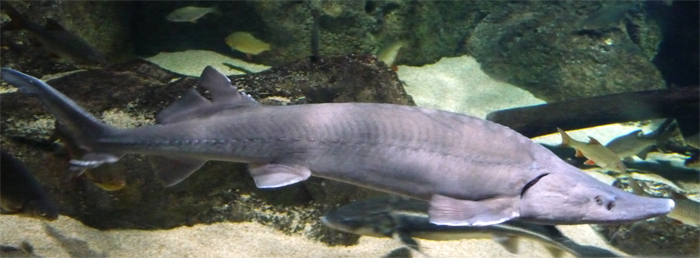

Threatened in Japan

Frequently asked questions
Why is Sakhalin Sturgeon classified as Critically Endangered?
Where does Sakhalin Sturgeon live?
What are the main threats to Sakhalin Sturgeon?
Get weekly conservation intelligence
One short digest a week of the most striking species and country data we ship, plus breaking conservation news paired with our database where it matters.
Free, no spam. One-click unsubscribe in every email.