
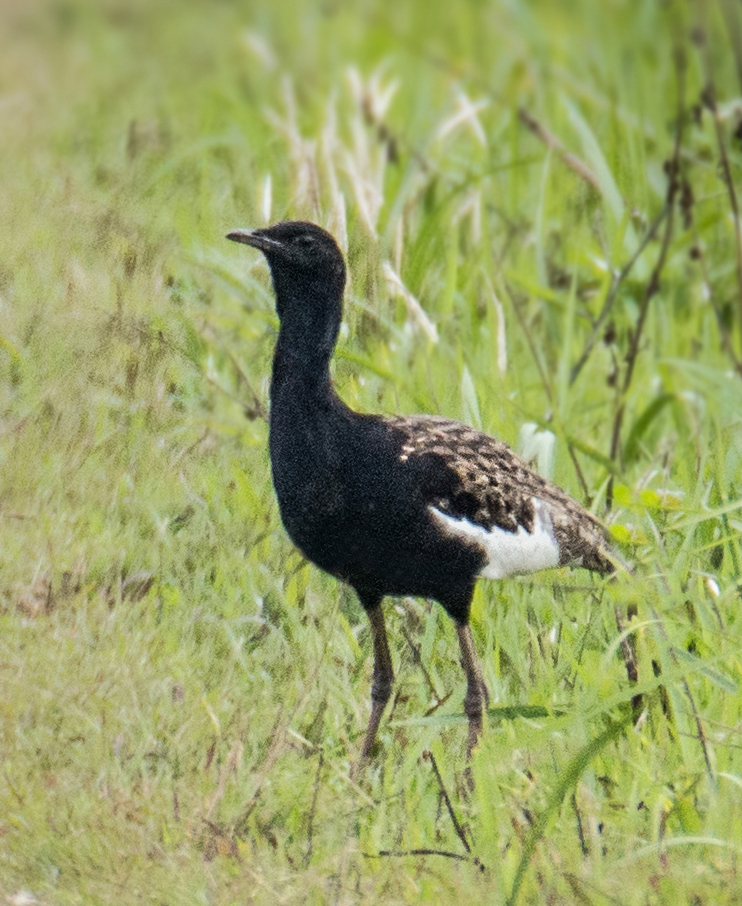
Great Indian Bustard
Ardeotis nigriceps
Photo: Photo: Wikimedia Commons, CC BY-SA
Overview
The great Indian bustard or Indian bustard is a bustard occurring on the Indian subcontinent. It is a large bird with a horizontal body, long bare legs and is among the heaviest of the flying birds. Once common on the dry grasslands and shrubland in India, as few as 150 individuals were estimated to survive as of 2018, reduced from an estimated 250 individuals in 2011.
It is critically endangered due to hunting and habitat loss. It is protected under the Indian Wild Life (Protection) Act, 1972.
The Great Indian Bustard faces catastrophic population decline primarily due to collision mortality with power lines, which kills an estimated 15% of the population annually. Habitat conversion of grasslands to agriculture and renewable energy infrastructure has fragmented remaining populations across just four states in India. Hunting pressure and disturbance from increased human activity in remaining habitat patches continue to impact breeding success and survival rates.
Habitat
Inhabits open grasslands, semi-arid scrublands, and thorny scrub areas across the Indian subcontinent, particularly favoring short grass plains with scattered thorny bushes. Requires large territories of undisturbed grassland ecosystem for foraging and successful breeding.
Conservation measures underway
Other threatened species in OTIDIDAE


Threatened in India


Frequently asked questions
Why is Great Indian Bustard classified as Critically Endangered?
Where does Great Indian Bustard live?
What are the main threats to Great Indian Bustard?
Get weekly conservation intelligence
One short digest a week of the most striking species and country data we ship, plus breaking conservation news paired with our database where it matters.
Free, no spam. One-click unsubscribe in every email.