
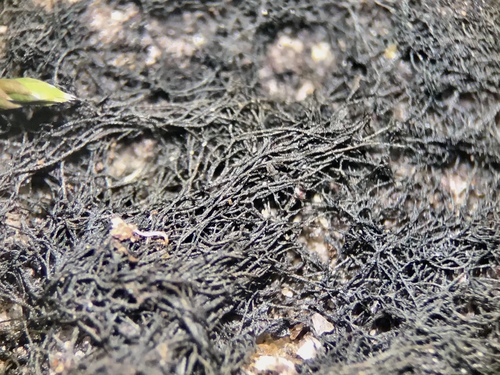
Confused Limestone Lichen
Thyrea confusa
Photo: Wikimedia Commons (CC) via https://en.wikipedia.org/wiki/Thyrea_confusa
Overview
Thyrea confusa is a lichenized fungus belonging to the family Lichinaceae, forming small, dark, gelatinous-textured thalli typically found encrusting calcareous rock and stone surfaces. Like other members of the Lichinaceae, it likely engages in a symbiotic partnership with cyanobacteria rather than green algae, giving it the capacity to fix atmospheric nitrogen and contribute to nutrient cycling on the mineral substrates it colonizes. As with most lichens, growth is slow, and the organism is highly sensitive to changes in air quality, moisture regime, and substrate stability, making it a useful bioindicator of environmental conditions.
The species has a wide but scattered distribution across temperate and montane regions of Europe, North America, Asia, South America, and Australia, with records spanning countries including Norway, Sweden, France, Italy, Spain, Switzerland, Germany, Japan, Mexico, Brazil, China, and Russia, among others. It occupies terrestrial habitats, generally associated with limestone and other calcareous rock outcrops in relatively undisturbed settings.
Its IUCN status of Vulnerable reflects a suite of ongoing pressures. Air pollution and acid deposition degrade the rock surfaces and alter chemical conditions the species depends on, while urban development and habitat fragmentation reduce the availability of intact substrate. Loss of suitable substrate, climate change affecting precipitation patterns, and industrial emissions further compound these stresses across its range.
Population trends are currently unknown, limiting precise assessment of trajectory. Conservation attention has largely come through inclusion in regional lichen red lists and habitat protection measures tied to broader rock outcrop and calcareous grassland conservation efforts. Continued monitoring, air quality regulation, and protection of remaining substrate habitats will likely be important in determining whether the species stabilizes or continues to decline.
Confused Limestone Lichen is under pressure from polluted air and acid rain, the loss of the trees it needs to grow on, and cities and towns expanding into its habitat. Chemical pollution from industry and shifting rainfall and temperature patterns caused by climate change are adding further strain. These combined threats appear to be ongoing and steady rather than easing, suggesting the situation is not improving.
Habitat
Thyrea confusa grows exclusively on the bark of mature deciduous trees, particularly favoring oak and beech species in old-growth forests and established parklands. The species requires stable microclimatic conditions with consistent humidity levels and minimal air pollution, typically found in undisturbed woodland environments across northern and central Europe.
Other threatened species in Lichinaceae


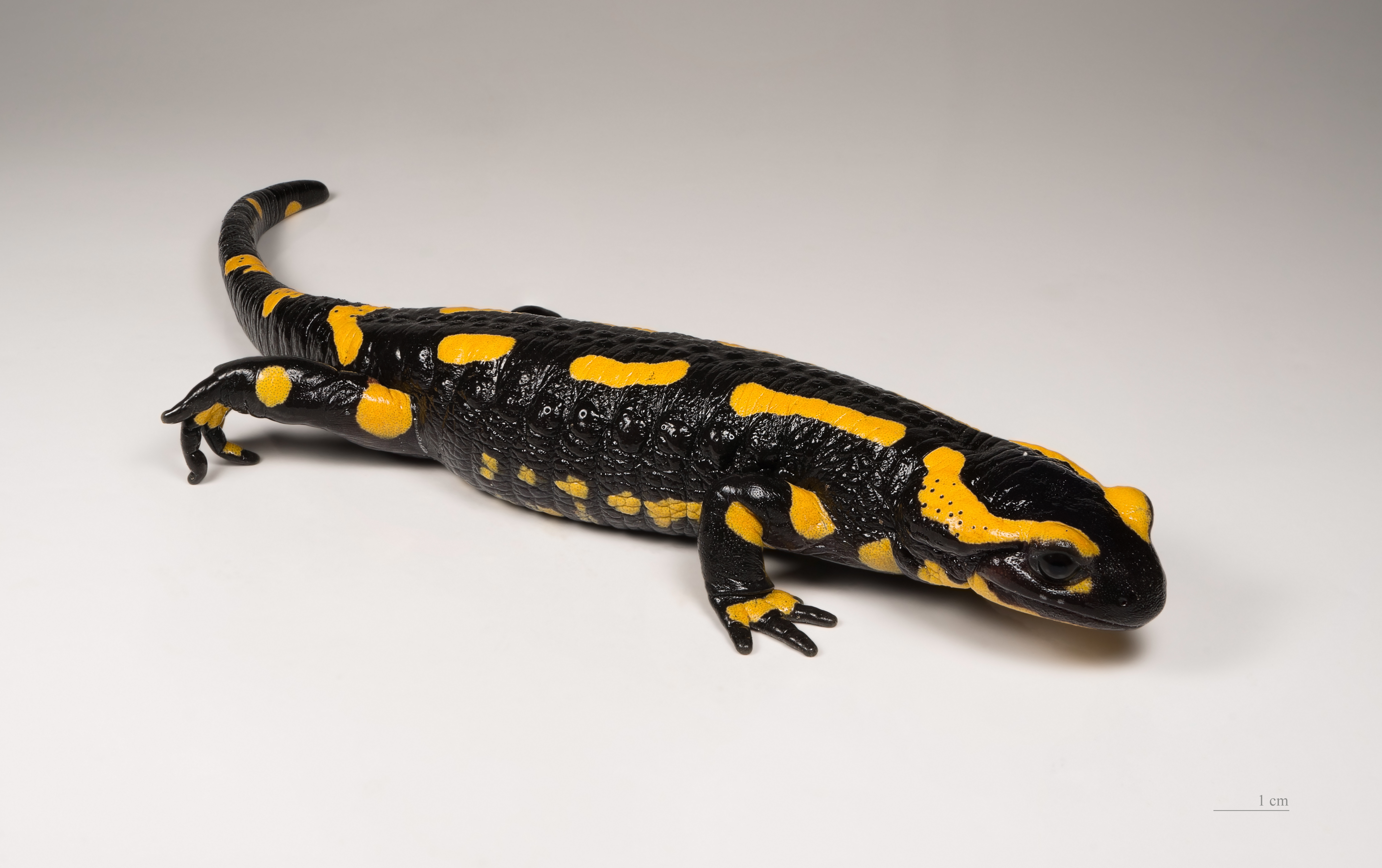
Threatened in Algeria
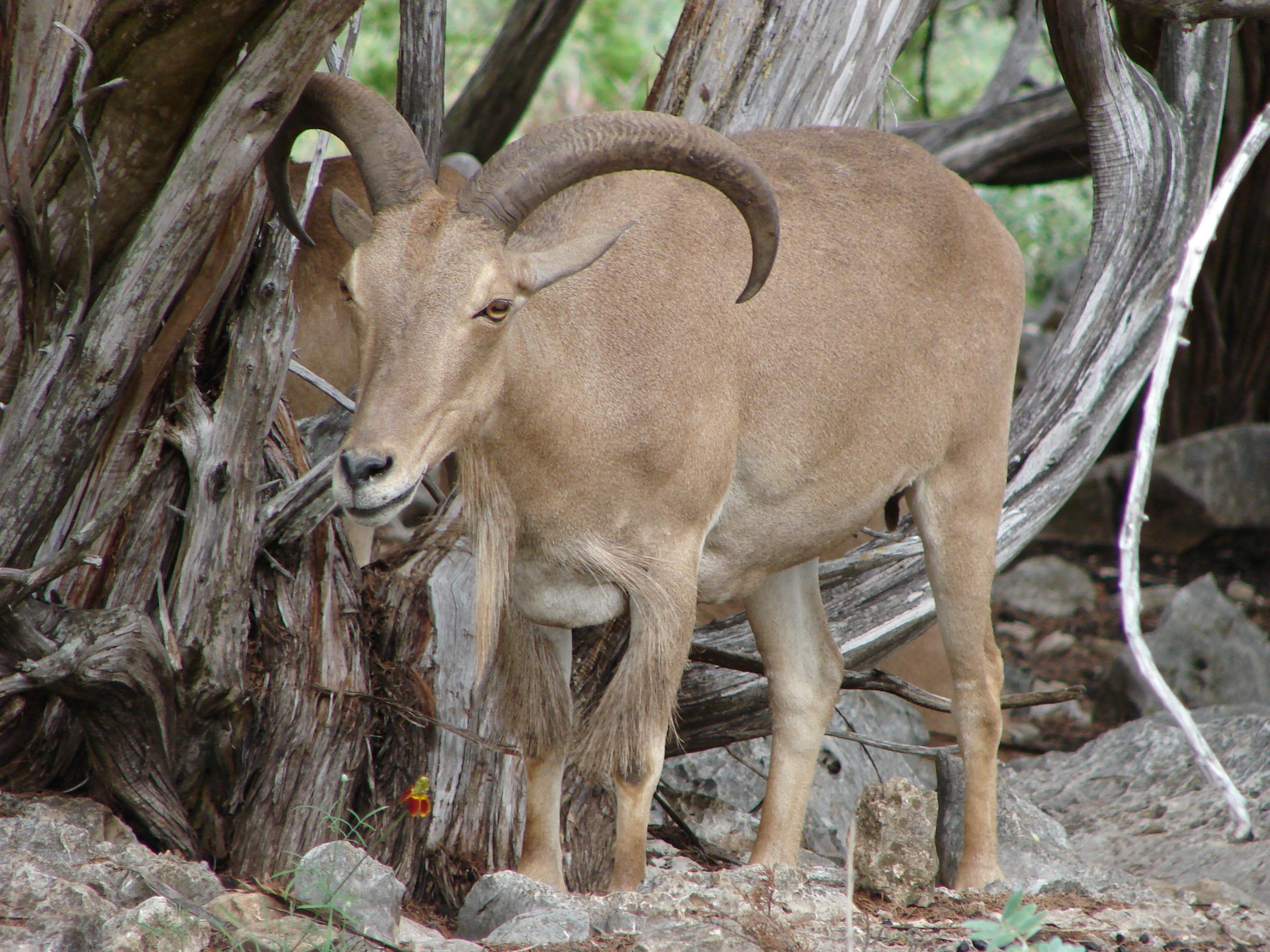


Frequently asked questions
Why is Confused Limestone Lichen classified as Vulnerable?
Where does Confused Limestone Lichen live?
What are the main threats to Confused Limestone Lichen?
Get weekly conservation intelligence
One short digest a week of the most striking species and country data we ship, plus breaking conservation news paired with our database where it matters.
Free, no spam. One-click unsubscribe in every email.