
Lempholemma botryosum
Photo: iNaturalist: (c) Samuel Brinker, some rights reserved (CC BY-NC), uploaded by Samuel Brinker
Overview
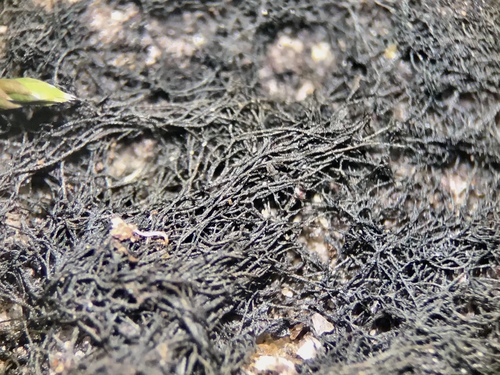
Druelakrislav (Lempholemma botryosum) is a distinctive crustose lichen forming thin, grayish-green to bluish-gray crusts on rock surfaces. This species develops characteristic clustered, grape-like soralia that give it its distinctive botryose appearance, and plays an important ecological role as a pioneer species in rock colonization and soil formation processes.
Lempholemma botryosum faces severe decline primarily due to habitat loss from deforestation and air pollution, which degrades the specific atmospheric conditions this lichen requires. Climate change and acid rain further threaten the delicate balance of humidity and air quality essential for its survival.
Habitat
Druelakrislav grows exclusively on siliceous rocks in humid, shaded environments such as north-facing cliff faces, boulder fields in old-growth forests, and rocky outcrops near streams or waterfalls. The species requires consistent moisture levels and low light conditions, typically found at elevations between 200-1200 meters in temperate montane regions.
Other threatened species in Lichinaceae


Frequently asked questions
Why is Lempholemma botryosum classified as Endangered?
Where does Lempholemma botryosum live?
What are the main threats to Lempholemma botryosum?
Get weekly conservation intelligence
One short digest a week of the most striking species and country data we ship, plus breaking conservation news paired with our database where it matters.
Free, no spam. One-click unsubscribe in every email.