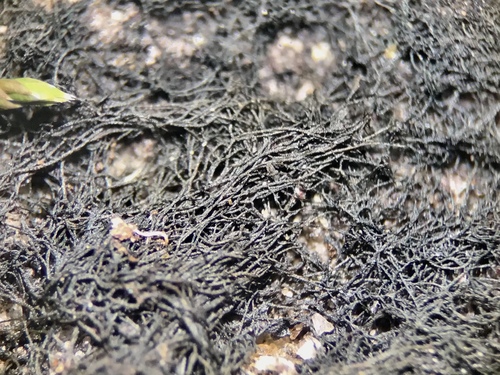
Dryside Rockshag Lichen
Ephebe hispidula
Photo: Photo: (c) Tomás Curtis, some rights reserved (CC BY-NC), uploaded by Tomás Curtis
Overview
The Dryside Rockshag Lichen (Ephebe hispidula) is a small, filamentous lichen species forming dark, bristly tufts on exposed rock surfaces. Like other members of the genus Ephebe, it has a cyanobacterial photobiont (typically Stigonema or a related cyanobacterium), giving it a blackish, hair-like thallus that is tightly anchored to its rocky substrate. This species is classified as Critically Endangered (CR) by the IUCN, reflecting a severely restricted known range and acute vulnerability to further decline.
It is associated with dry, rocky habitats, typically on siliceous or calcareous outcrops in areas with specific moisture and light regimes that allow the cyanobacterial symbiosis to persist despite otherwise arid surrounding conditions. Because lichens in this genus depend on narrow microclimatic niches, even small-scale disturbances to rock substrate, surface hydrology, or shading vegetation can eliminate local populations. Threats to the Dryside Rockshag Lichen include habitat degradation from quarrying, trampling, and changes in local land use, as well as the heightened sensitivity of cyanolichens to shifts in atmospheric moisture and air quality.
Its narrow and poorly documented distribution compounds these risks, as a single adverse event at a known site could affect a significant share of the global population. Conservation attention for rock-dwelling cyanolichens has been increasing in recent years, with botanical surveys and herbarium-based taxonomic work helping to clarify the species' true range and substrate requirements. Protection of known rock outcrop sites from quarrying and development, alongside continued field surveys to locate additional populations, represents the most promising near-term conservation strategy.
Encouragingly, growing interest in lichenological inventories within dryland and rock habitat ecosystems is improving the baseline knowledge needed to support targeted conservation action for this and similarly overlooked species.
Mørk uldlav (Ephebe hispidula) faces severe threats from air pollution and acid rain, which directly damage its sensitive thallus structure and disrupt its photosynthetic processes. Climate change compounds these pressures by altering precipitation patterns and increasing temperature extremes that exceed the species' narrow tolerance range. Habitat loss through deforestation and urban development further reduces available substrate for this specialized lichen.
Habitat
This lichen species grows on the bark of deciduous and coniferous trees in humid, old-growth forests and well-established woodlands. It requires stable microclimatic conditions with consistent moisture levels and clean air quality, typically found in undisturbed forest environments.
Other threatened species in Lichinaceae


Frequently asked questions
Why is Dryside Rockshag Lichen classified as Critically Endangered?
Where does Dryside Rockshag Lichen live?
What are the main threats to Dryside Rockshag Lichen?
Get weekly conservation intelligence
One short digest a week of the most striking species and country data we ship, plus breaking conservation news paired with our database where it matters.
Free, no spam. One-click unsubscribe in every email.