
Graceful Shark
Carcharhinus amblyrhynchoides
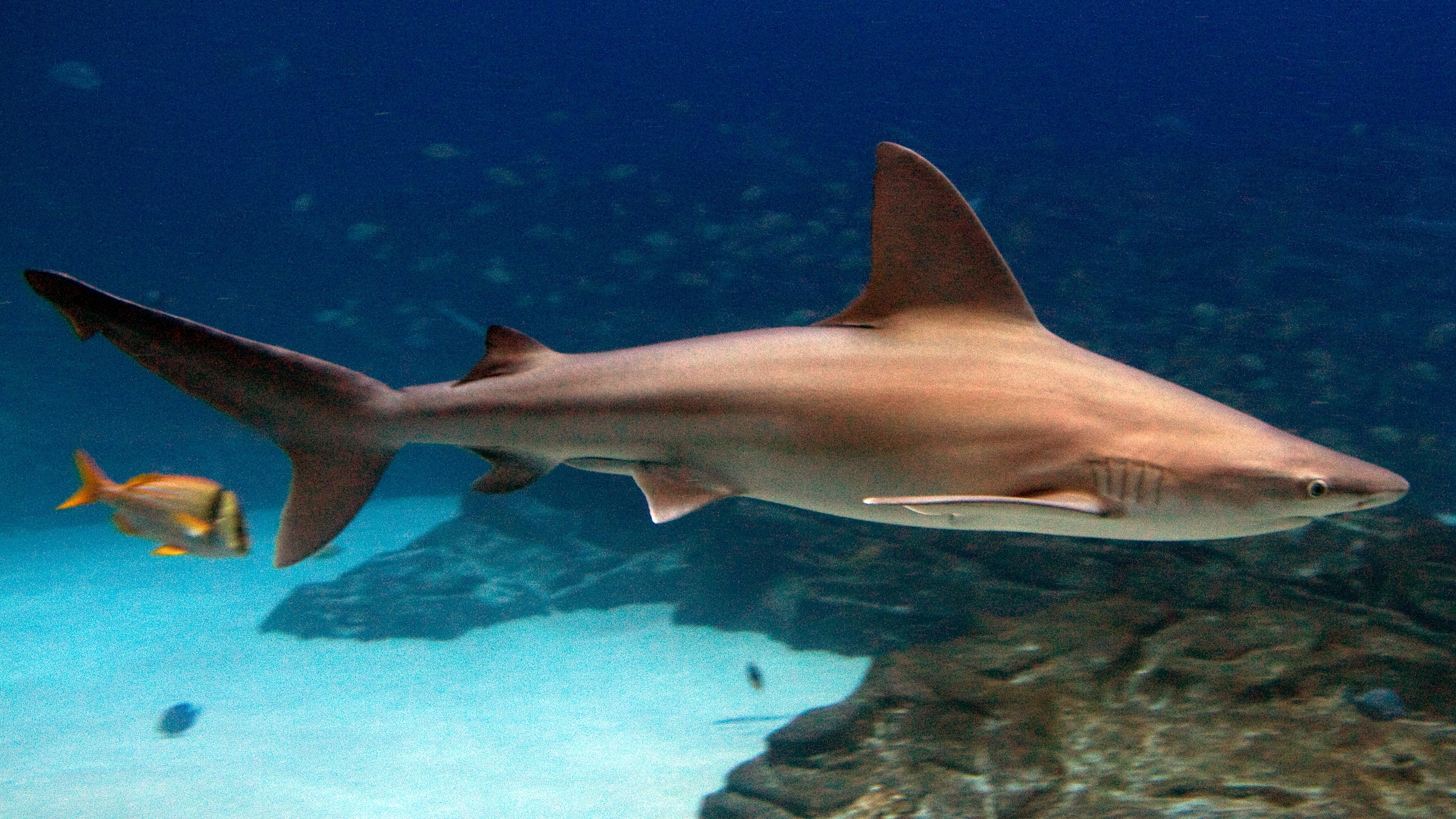
Photo: Wikimedia Commons (CC) via https://en.wikipedia.org/wiki/Graceful_shark
Overview
Carcharhinus amblyrhynchoides is a slender-bodied requiem shark reaching around 1.6 meters in length, distinguished by its streamlined form and long, pointed snout. Like other carcharhinids, it is a fast-swimming predator feeding primarily on small bony fishes, cephalopods, and crustaceans, occupying a mid-to-upper trophic level in coastal and shelf ecosystems. It is viviparous, giving birth to small litters after a gestation period typical of the genus, a reproductive strategy that limits population recovery rates.
The species inhabits tropical inshore and offshore marine waters across the Indo-West Pacific, ranging from the eastern coast of Africa and the Arabian Gulf through South and Southeast Asia to northern Australia and Papua New Guinea. It is typically found over continental and insular shelves, including turbid coastal zones, though it also occurs in open oceanic waters.
Population decline is driven largely by intensive and often unregulated fishing pressure throughout its range, where it is taken as both target catch and bycatch in commercial and artisanal fisheries. Coastal habitat degradation compounds this pressure: expansion of housing and urban development, aquaculture operations, agricultural land conversion, and logging activities all contribute to the loss and degradation of nearshore nursery and foraging habitats important to juveniles.
Conservation efforts include regional fisheries management measures, shark-focused bycatch mitigation initiatives, and protections under international trade frameworks applicable to some range states, alongside monitoring programs assessing catch composition in mixed shark fisheries.
Given sustained fishing pressure across much of its range and ongoing coastal habitat loss, the population is assessed as decreasing, with no strong evidence of recovery under current management conditions.
The Graceful Shark is mainly threatened by being caught, both on purpose and accidentally, in fishing operations across its range. Its coastal habitat is also being damaged by construction of housing and buildings, fish and shrimp farming, farming of crops, and cutting down of coastal forests. All of these pressures are currently ongoing and show no sign of letting up, suggesting the threats to this species are intensifying.
Habitat
Conservation measures underway
Other threatened species in CARCHARHINIDAE

Threatened in Australia
Frequently asked questions
Why is Graceful Shark classified as Vulnerable?
Where does Graceful Shark live?
What are the main threats to Graceful Shark?
Get weekly conservation intelligence
One short digest a week of the most striking species and country data we ship, plus breaking conservation news paired with our database where it matters.
Free, no spam. One-click unsubscribe in every email.