
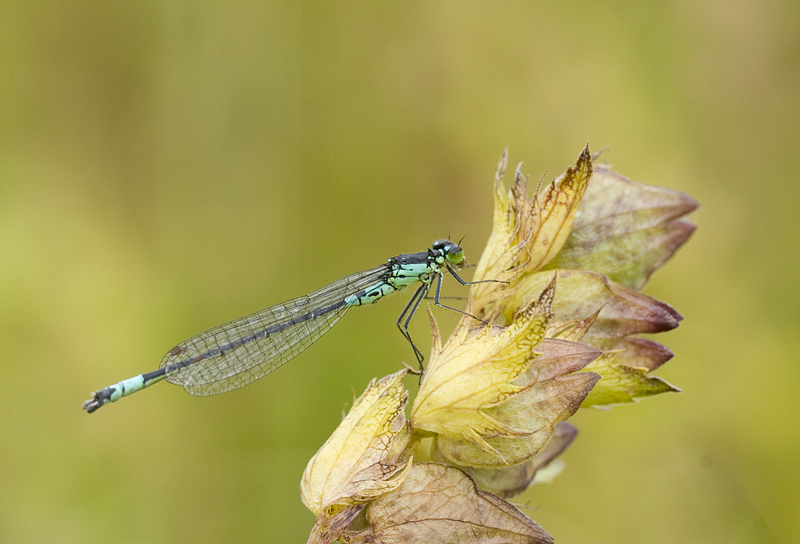
Blue-eye
Erythromma lindenii
Photo: Wikimedia Commons (CC) via https://en.wikipedia.org/wiki/Goblet-marked_damselfly
Overview
A detailed profile for this species is sourced from the IUCN Red List of Threatened Species as assessments become available.
The Goblet-marked Damselfly faces significant population declines primarily due to habitat degradation and loss of suitable breeding waters. Eutrophication from agricultural runoff and urban development has altered the water chemistry of many ponds and lakes where this species breeds, reducing the abundance of submerged vegetation essential for egg-laying. Climate change is shifting the species' range northward, fragmenting populations and reducing habitat connectivity across its European distribution.
Habitat
This damselfly inhabits well-vegetated ponds, lakes, and slow-flowing rivers with abundant submerged and floating vegetation, particularly favoring waters with water lilies and other broad-leaved aquatic plants. It requires clean, mesotrophic to slightly eutrophic waters with stable water levels and good water quality for successful reproduction.
Other threatened species in Coenagrionidae



Threatened in Albania

Frequently asked questions
Why is Blue-eye classified as Vulnerable?
Where does Blue-eye live?
What are the main threats to Blue-eye?
Get weekly conservation intelligence
One short digest a week of the most striking species and country data we ship, plus breaking conservation news paired with our database where it matters.
Free, no spam. One-click unsubscribe in every email.