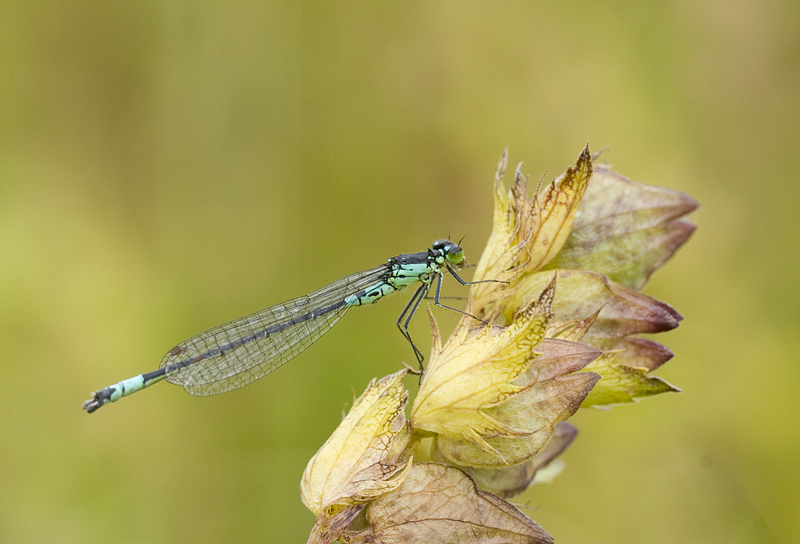
Dark Bluet
Coenagrion armatum
Photo: Wikimedia Commons (CC) via https://en.wikipedia.org/wiki/Norfolk_damselfly
Overview
The Norfolk Damselfly is a small, slender dragonfly species measuring approximately 32-35mm in length. Males display distinctive blue and black coloration with characteristic markings on their thorax, while females are typically greenish-brown. This species exhibits typical damselfly behavior, folding its wings along its body when at rest and feeding on small flying insects like midges and mosquitoes.
As both predator and prey, it plays an important role in freshwater ecosystem food webs.
Despite its name suggesting British origins, the Norfolk Damselfly has an extensive Eurasian distribution spanning from Western Europe through Scandinavia to Central Asia, including countries from the Netherlands to Mongolia. The species inhabits shallow, well-vegetated water bodies including ditches, ponds, and slow-flowing streams with abundant emergent vegetation.
The species faces significant habitat pressures across its range. In the UK, where it was historically found only in the Norfolk Broads, populations have declined due to water pollution, habitat degradation, and changes in water management practices. Agricultural intensification and urban development have reduced suitable breeding sites throughout Europe. Climate change may also affect the delicate balance of water levels and vegetation required for successful reproduction.
Conservation efforts include habitat restoration projects in key locations and water quality improvement initiatives. Some countries have implemented protected area designations for critical breeding sites.
The species' current outlook remains uncertain due to limited population monitoring across much of its range. While some local conservation successes have been reported, the overall population trend is unknown, reflecting the need for enhanced monitoring and coordinated international conservation strategies.
The Norfolk Damselfly is critically threatened by habitat loss and degradation of its specialized wetland environments on Norfolk Island. The species' extremely limited range makes it highly vulnerable to environmental changes, invasive species, and human disturbance of its freshwater breeding sites.
Other threatened species in Coenagrionidae


Threatened in Åland Islands


Frequently asked questions
Why is Dark Bluet classified as Endangered?
Where does Dark Bluet live?
What are the main threats to Dark Bluet?
Get weekly conservation intelligence
One short digest a week of the most striking species and country data we ship, plus breaking conservation news paired with our database where it matters.
Free, no spam. One-click unsubscribe in every email.