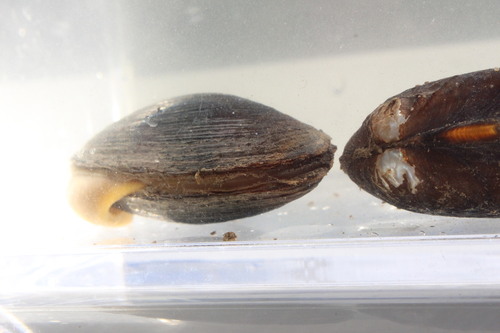
Glenelg Freshwater Mussel
Hyridella glenelgensis
Photo: Photo: (c) fraserasquith, some rights reserved (CC BY-NC)
Overview
This freshwater bivalve belongs to the family Hyriidae, a group of mussels native to Australian waterways. Like other unionid mussels, it is a filter feeder, drawing water across its gills to extract algae, bacteria, and organic particles, which contributes to water clarity and nutrient cycling in its habitat. Its life cycle depends on a larval stage (glochidia) that must attach temporarily to the gills or fins of a host fish before developing into a free-living juvenile, making it ecologically linked to local fish populations.
The species is restricted to the Glenelg River system in southeastern Australia, occupying permanent rivers, streams, and inland wetlands. It requires stable flow conditions, clean substrate, and healthy water quality to survive and reproduce.
The species is Critically Endangered, with a decreasing population trend. Threats include habitat degradation from urban expansion, conversion of land to crops and pasture, and livestock grazing along waterways. Dam construction and water extraction alter natural flow regimes essential for reproduction and host-fish movement, while agricultural runoff introduces sediment and nutrient pollution.
Droughts reduce available habitat and water quality, while storms, flooding, and altered fire regimes further destabilize river systems. Direct disturbance from fishing and aquatic resource harvesting compounds these pressures.
Conservation attention has focused on monitoring remaining populations, assessing water quality and flow requirements, and identifying host-fish relationships critical to reproduction. Broader catchment management and environmental water allocations in the Glenelg River system may offer indirect benefits.
Given its extremely restricted range, ongoing habitat pressures, and reliance on specific hydrological and biological conditions, the species' outlook remains precarious, with continued population decline likely absent significant improvement in river management and water quality.
The Glenelg Freshwater Mussel faces pressure from farmland runoff, urban development, and livestock grazing near waterways, all of which pollute or damage its river habitat. Water management structures like dams alter natural flow patterns, while extreme weather events such as droughts, floods, and storms disrupt the stable conditions the species needs to survive. Additional stress comes from fire-related impacts and disturbance from fishing and harvesting activities in its habitat. These combined threats appear to be ongoing and stable rather than clearly worsening, though the variety of pressures suggests the species remains vulnerable.
Habitat
Conservation measures underway
Other threatened species in HYRIIDAE
Threatened in Australia
Frequently asked questions
Why is Glenelg Freshwater Mussel classified as Critically Endangered?
Where does Glenelg Freshwater Mussel live?
What are the main threats to Glenelg Freshwater Mussel?
Get weekly conservation intelligence
One short digest a week of the most striking species and country data we ship, plus breaking conservation news paired with our database where it matters.
Free, no spam. One-click unsubscribe in every email.