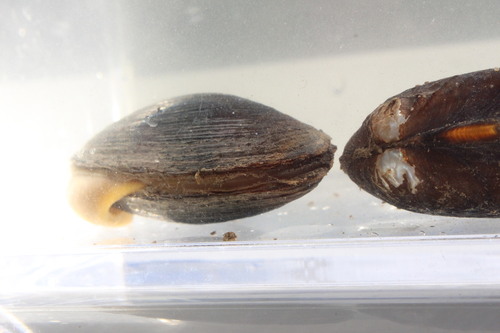
Diplodon dunkerianus
Overview
A detailed profile for this species is sourced from the IUCN Red List of Threatened Species as assessments become available.
Diplodon dunkerianus faces severe population declines primarily due to water pollution from agricultural runoff and urban development in its freshwater habitats. Dam construction and river channelization have fragmented populations and altered the natural flow regimes essential for this mussel's reproductive cycle. Sedimentation from deforestation and intensive agriculture has degraded water quality, reducing oxygen levels and burying the substrate where these filter-feeders anchor themselves.
Habitat
This freshwater mussel inhabits clean, well-oxygenated rivers and streams with sandy or gravelly substrates in South America. It requires stable water flow and low sedimentation levels to maintain its filter-feeding lifestyle and successful reproduction.
Other threatened species in HYRIIDAE
Frequently asked questions
Why is Diplodon dunkerianus classified as Endangered?
Where does Diplodon dunkerianus live?
What are the main threats to Diplodon dunkerianus?
Get weekly conservation intelligence
One short digest a week of the most striking species and country data we ship, plus breaking conservation news paired with our database where it matters.
Free, no spam. One-click unsubscribe in every email.