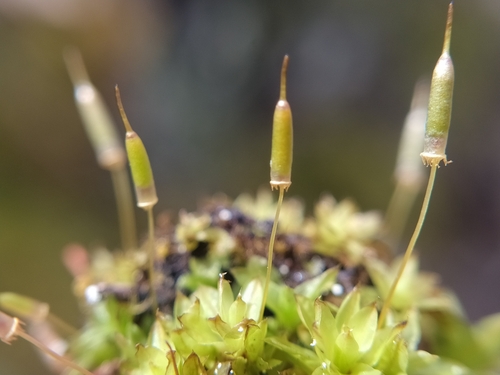
Fringed Extinguisher-moss
Encalypta ciliata
Photo: Photo: (c) David A. L., all rights reserved, uploaded by David A. L.
Overview
The Fringed Extinguisher-moss (Encalypta ciliata) is a distinctive bryophyte species characterized by its cylindrical capsules topped with a fringed calyptra that resembles a tiny extinguisher cap, giving the genus its common name. This moss forms small, dense cushions of erect shoots typically 1-3 centimeters tall, with narrow, lance-shaped leaves that curl inward when dry. The species exhibits the characteristic extinguisher-moss feature of a hairy, hood-like covering over the spore capsule, with prominent ciliate margins that distinguish it from related species.
Encalypta ciliata inhabits calcareous substrates in montane and alpine environments across scattered locations in Europe and North America, typically growing on limestone rocks, mortar, and occasionally on basic soil in open, exposed sites. The species shows a preference for areas with moderate moisture and good air circulation, often found at elevations between 500-2000 meters. Currently classified as Critically Endangered by the IUCN, this moss faces severe population declines across its fragmented range.
The species has experienced dramatic reductions in both the number of known populations and overall distribution area over recent decades. Despite its precarious status, recent targeted surveys have successfully relocated several populations previously thought extinct, and specialized bryophyte conservation programs are now monitoring known sites. Ex-situ cultivation techniques for Encalypta species have shown promising results, offering hope for potential reintroduction efforts.
The moss's ability to survive in harsh alpine conditions demonstrates remarkable resilience, and protected status in several European countries provides legal framework for habitat conservation.
The primary threat to Fringed Extinguisher-moss stems from air pollution, particularly nitrogen deposition and acid rain, which alter the chemistry of its preferred calcareous substrates and disrupt the basic pH conditions essential for its survival. Climate change poses an additional significant threat through altered precipitation patterns and increased temperature extremes in alpine habitats, potentially pushing populations beyond their physiological tolerance limits. Habitat destruction from quarrying activities and urban development has eliminated several historical sites, while the species' extremely limited dispersal ability prevents natural recolonization of suitable but distant habitats.
Habitat
Fringed Extinguisher-moss grows exclusively on calcareous substrates including limestone outcrops, old mortar walls, and basic rock crevices in montane and alpine environments. The species requires well-drained sites with consistent but not excessive moisture, typically in partially shaded locations with good air circulation at elevations ranging from 500 to 2000 meters.
Other threatened species in Encalyptaceae
Threatened in Andorra


Frequently asked questions
Why is Fringed Extinguisher-moss classified as Critically Endangered?
Where does Fringed Extinguisher-moss live?
What are the main threats to Fringed Extinguisher-moss?
Get weekly conservation intelligence
One short digest a week of the most striking species and country data we ship, plus breaking conservation news paired with our database where it matters.
Free, no spam. One-click unsubscribe in every email.