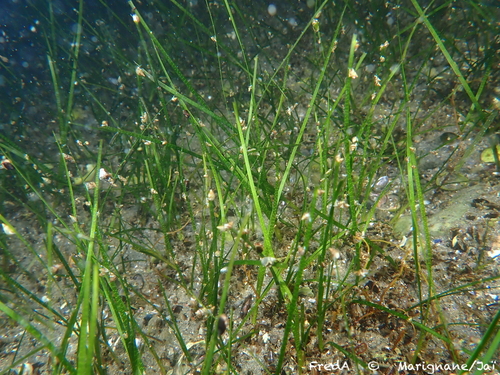
Dwarf Eelgrass
Zostera noltii
Photo: iNaturalist: (c) Frédéric ANDRE, some rights reserved (CC BY-NC), uploaded by Frédéric ANDRE
Overview
Zostera noltii is a small, seagrass species belonging to the family Zosteraceae, distinguished by narrow, ribbon-like leaves typically only a few millimetres wide. It forms dense meadows on intertidal and shallow subtidal sediments, spreading through an extensive network of rhizomes that stabilize sediment and cycle nutrients. These meadows provide critical nursery habitat for juvenile fish and invertebrates, food for grazing waterfowl, and contribute to carbon sequestration in coastal ecosystems.
The species has a broad distribution spanning the eastern Atlantic coast from Scandinavia to West Africa, the Mediterranean and Black Seas, and parts of East Asia, with records extending to Australia, New Zealand, and North America. It occupies muddy and sandy substrates in estuaries, lagoons, and sheltered coastal bays, generally in the intertidal zone or shallow subtidal waters.
Populations face pressure from multiple, overlapping threats. Coastal development, including land reclamation and infrastructure expansion, destroys meadow habitat directly. Agricultural and urban runoff introduces nutrients that fuel eutrophication and algal blooms, reducing light penetration needed for photosynthesis.
Physical disturbance from boat anchoring, propeller scarring, and bottom-contact fishing gear damages rhizome mats. Climate change and sea level rise add further stress by altering sediment dynamics and tidal exposure patterns.
Conservation responses include designation of protected marine areas across parts of its range, water quality regulations targeting nutrient pollution, restrictions on anchoring in sensitive zones, and various seagrass restoration and transplantation trials. Monitoring programs track meadow extent in several countries, though comprehensive population data remain limited.
Population trend is currently classified as unknown, reflecting inconsistent monitoring across its wide range. Given the persistence of multiple ongoing pressures, particularly coastal development and pollution, the species' long-term outlook depends heavily on the effectiveness of localized protective measures and water quality improvements.
Dwarf Eelgrass is being squeezed out by coastal building projects that destroy its shallow-water habitat, while runoff from farms and cities pollutes the water and feeds algae blooms that block the sunlight it needs to grow. Boats and fishing gear physically damage the delicate meadows, and rising sea levels and changing ocean conditions from climate change add further strain. Since all these pressures are currently listed as ongoing with no signs of easing, the overall threat level appears to be intensifying.
Habitat
Dwarf Eelgrass inhabits shallow intertidal and subtidal waters of estuaries, lagoons, and sheltered coastal areas with muddy or sandy substrates. It typically grows in waters less than 4 meters deep, forming dense meadows in areas with moderate salinity and gentle water movement.
Other threatened species in Zosteraceae

Threatened in Algeria


Frequently asked questions
Why is Dwarf Eelgrass classified as Vulnerable?
Where does Dwarf Eelgrass live?
What are the main threats to Dwarf Eelgrass?
Get weekly conservation intelligence
One short digest a week of the most striking species and country data we ship, plus breaking conservation news paired with our database where it matters.
Free, no spam. One-click unsubscribe in every email.