
Common Eel-Grass
Zostera marina
Photo: Wikimedia Commons (CC) via https://en.wikipedia.org/wiki/Zostera_marina
Overview
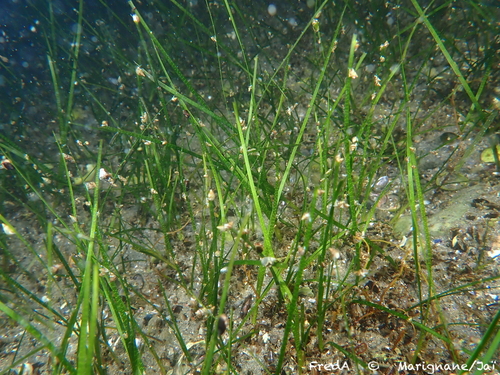
Zostera marina is a flowering vascular plant species as one of many kinds of seagrass, with this species known primarily by the English name of eelgrass with seawrack much less used, and refers to the plant after breaking loose from the submerged wetland soil, and drifting free with ocean current and waves to a coast seashore. It is a saline soft-sediment submerged plant native to marine environments on the coastlines of northern latitudes from subtropical to subpolar regions of North America and Eurasia.
Eelgrass faces significant threats from coastal development, water pollution, and climate change impacts that degrade its shallow marine habitats. Eutrophication from agricultural and urban runoff causes algal blooms that block sunlight essential for photosynthesis, while rising sea temperatures and ocean acidification further stress these critical seagrass ecosystems.
Habitat
Shallow coastal waters, estuaries, and protected bays with sandy or muddy substrates, typically in depths of 0.5-4 meters where sufficient sunlight penetrates for photosynthesis. Forms extensive underwater meadows in temperate and subarctic marine environments along coastlines.
Other threatened species in Zosteraceae
Frequently asked questions
Why is Common Eel-Grass classified as Vulnerable?
Where does Common Eel-Grass live?
What are the main threats to Common Eel-Grass?
Get weekly conservation intelligence
One short digest a week of the most striking species and country data we ship, plus breaking conservation news paired with our database where it matters.
Free, no spam. One-click unsubscribe in every email.