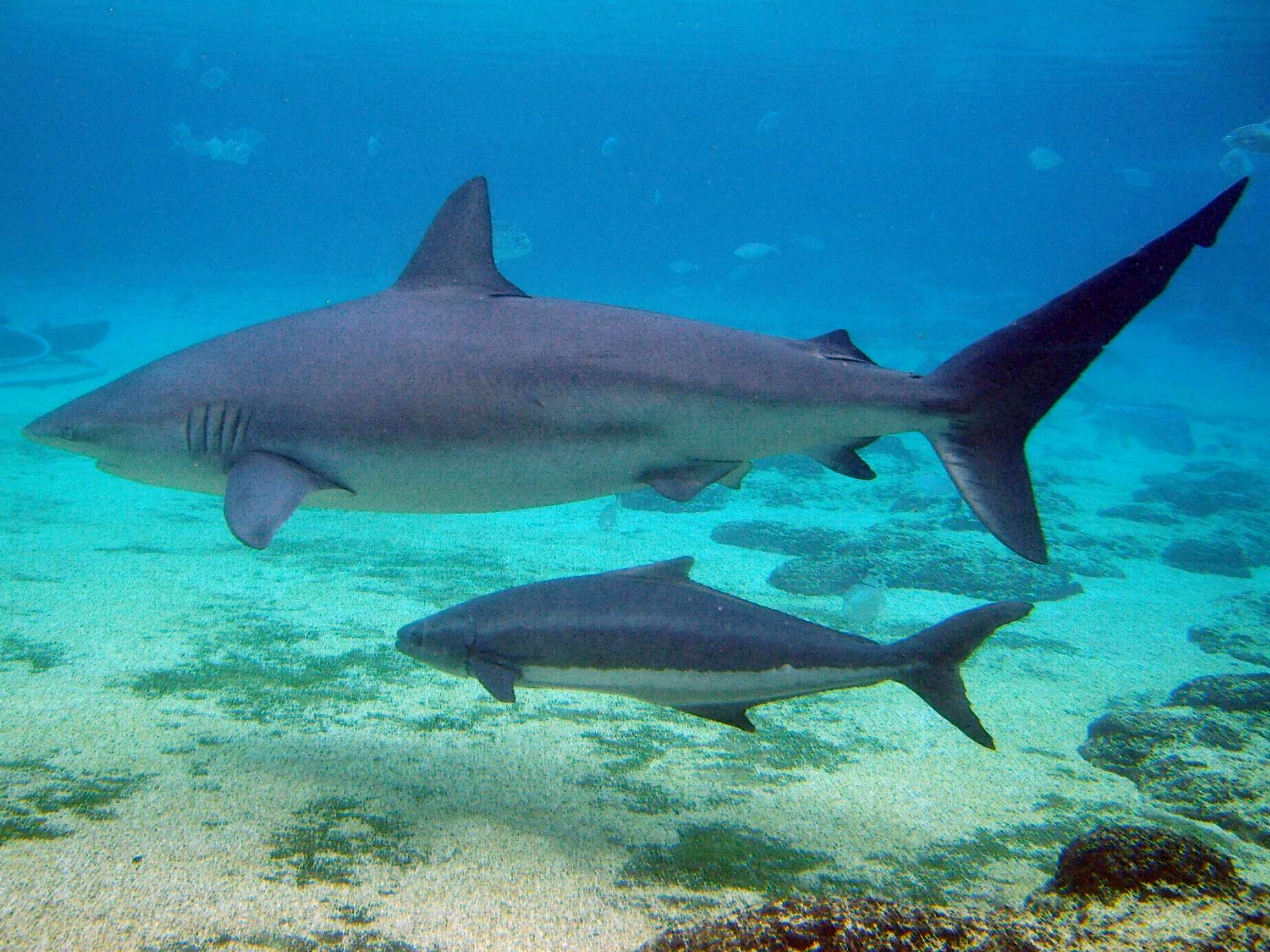
Dusky Shark
Carcharhinus obscurus
Photo: Wikimedia Commons (CC) via https://en.wikipedia.org/wiki/Dusky_shark
Overview
A large, slow-growing requiem shark, the dusky shark reaches lengths of over 3.5 meters and is recognized by its slender, fusiform body, bronze-grey coloration, and low, ridged dorsal fin. As an apex and mesopredator, it feeds on bony fish, smaller sharks, and cephalopods, helping regulate prey populations and maintain balance within marine food webs. Its life history is marked by exceptionally slow reproduction, with females maturing late and producing few offspring after long gestation periods, making populations especially vulnerable to overexploitation.
The species has a wide, circumglobal distribution across tropical and warm-temperate waters, inhabiting marine oceanic, neritic, and coastal zones. It has been recorded in the waters of over fifty countries and territories, including the United States, Australia, Brazil, South Africa, Indonesia, Japan, and numerous island and coastal nations across the Atlantic, Indian, and Pacific Oceans, occupying habitats from continental shelves to open ocean environments.
The dusky shark is classified as Endangered, with populations in ongoing decline. The primary threat is fishing and harvesting of aquatic resources, encompassing both targeted fisheries for meat and fins and substantial incidental capture as bycatch in longline and gillnet operations. Its low reproductive rate means populations recover slowly even when fishing pressure is reduced.
Conservation measures include regional fishing regulations, retention bans in some jurisdictions, and listings under international trade agreements that restrict fin trade. Some areas have implemented shark sanctuaries and bycatch mitigation measures within commercial fisheries.
Despite these efforts, the species' slow life cycle and continued global fishing pressure mean recovery is expected to be gradual at best. Current data indicate ongoing population decreases across much of its range, underscoring the need for sustained and expanded management measures.
Dusky Sharks are primarily threatened by commercial and recreational fishing, where they are caught both intentionally and as accidental bycatch in nets and longlines targeting other species. Their slow growth and low reproductive rate make it hard for populations to recover from these ongoing losses. This threat remains persistent and continues without signs of easing.
Habitat
Conservation measures underway
Other threatened species in CARCHARHINIDAE

Threatened in Algeria



Frequently asked questions
Why is Dusky Shark classified as Endangered?
Where does Dusky Shark live?
What are the main threats to Dusky Shark?
Get weekly conservation intelligence
One short digest a week of the most striking species and country data we ship, plus breaking conservation news paired with our database where it matters.
Free, no spam. One-click unsubscribe in every email.