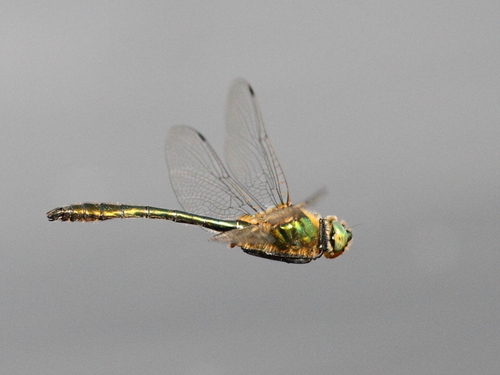
Downy Emerald
Cordulia aenea
Photo: iNaturalist: (c) mcamcamca, some rights reserved (CC BY-SA)
Overview
The downy emerald is a species of dragonfly. It is metallic green and bronze in color, and its thorax is coated with fine hairs, hence its name. Like most other emeralds, the downy emerald has bright shiny green eyes. Adults are around 5 cm (2.0 in) in length, and are in flight from May through July each year.
The Downy Emerald faces significant threats from habitat degradation and loss of suitable breeding sites. Pollution of freshwater systems, drainage of wetlands, and climate change impacts on aquatic ecosystems are reducing the availability of clean, well-vegetated water bodies essential for larval development.
Habitat
Inhabits well-vegetated ponds, lakes, bog pools, and slow-flowing streams with abundant emergent and floating vegetation. Adults require nearby woodland or scrubland for roosting and feeding, while larvae develop in shallow, acidic to neutral waters with rich organic substrates.
Other threatened species in Corduliidae


Threatened in Åland Islands


Frequently asked questions
Why is Downy Emerald classified as Vulnerable?
Where does Downy Emerald live?
What are the main threats to Downy Emerald?
Get weekly conservation intelligence
One short digest a week of the most striking species and country data we ship, plus breaking conservation news paired with our database where it matters.
Free, no spam. One-click unsubscribe in every email.