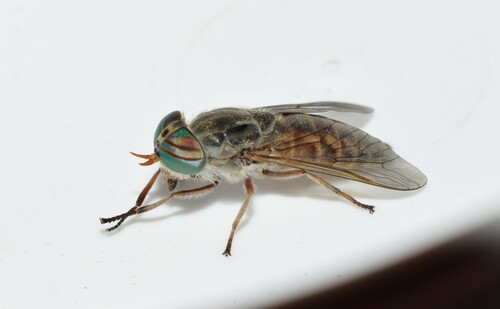
Downland Horsefly
Tabanus glaucopis
Photo: iNaturalist: (c) Σάββας Ζαφειρίου (Savvas Zafeiriou), some rights reserved (CC BY-NC), uploaded by Σάββας Ζαφειρίου (Savvas Zafeiriou)
Overview
Tabanus glaucopis, also known as the downland horsefly, is a species of biting horse-fly.
The Downland Horsefly faces significant threats from habitat loss due to agricultural intensification and urban development of its specialized chalk downland ecosystems. Climate change and altered grazing regimes are further degrading the short grassland habitats this species depends on for breeding and foraging.
Habitat
Chalk downlands and calcareous grasslands with short turf maintained by grazing, typically found on well-drained slopes and hillsides. The species requires areas with sparse vegetation where adults can hunt for prey and access suitable breeding sites in the underlying soil.
Other threatened species in Tabanidae

Threatened in Austria
Frequently asked questions
Why is Downland Horsefly classified as Vulnerable?
Where does Downland Horsefly live?
What are the main threats to Downland Horsefly?
Get weekly conservation intelligence
One short digest a week of the most striking species and country data we ship, plus breaking conservation news paired with our database where it matters.
Free, no spam. One-click unsubscribe in every email.