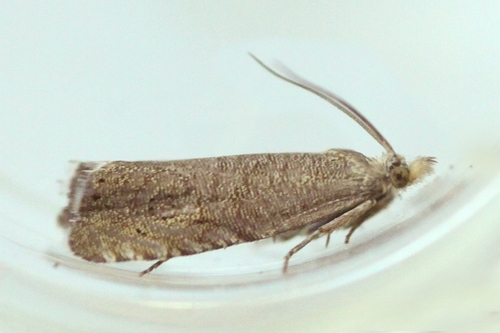
Dark Drill
Dichrorampha senectana
Photo: iNaturalist: (c) tedy44, some rights reserved (CC BY-NC)
Overview
Dichrorampha senectana is a moth belonging to the family Tortricidae first described by Achille Guenée in 1845.
The Dark Drill faces significant threats from habitat loss and degradation due to agricultural intensification and urban development across its European range. Climate change poses additional risks by altering the distribution and phenology of its host plants, while pesticide use in agricultural areas directly impacts both the species and its food sources.
Habitat
Inhabits woodland edges, scrubland, and areas with abundant Artemisia species (wormwoods) where larvae develop within the flower heads and stems of these host plants. Typically found in semi-natural grasslands, chalk downs, and coastal areas with suitable host plant communities.
Other threatened species in Tortricidae


Threatened in Åland Islands


Frequently asked questions
Why is Dark Drill classified as Vulnerable?
Where does Dark Drill live?
What are the main threats to Dark Drill?
Get weekly conservation intelligence
One short digest a week of the most striking species and country data we ship, plus breaking conservation news paired with our database where it matters.
Free, no spam. One-click unsubscribe in every email.