Danube Delta dwarf goby
CRCritically Endangered

Danube Delta dwarf goby

Knipowitschia cameliae

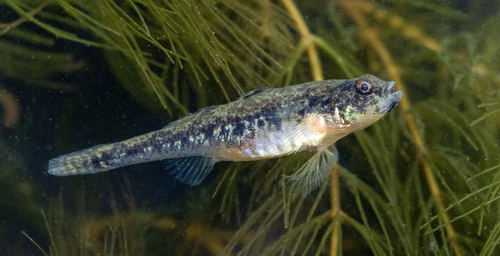
Knipowitschia cameliae, the Danube delta dwarf goby, is a species of goby known only from the brackish and fresh waters of a lagoon south of the Danube Delta in Romania. This fish is a shallow water species being found in waters less than 1 metre (3.

1

Countries

Photo: iNaturalist: (c) davide bellucci, some rights reserved (CC BY-NC), uploaded by davide bellucci

01Classification

Taxonomy & Classification

Kingdom

Animalia

Phylum

Chordata

Order

Perciformes

Family

Gobiidae

Genus

Knipowitschia

Danube Delta dwarf goby belongs to the family Gobiidae, order Perciformes, within the unknown class.

02Description

Species Profile

Knipowitschia cameliae, the Danube delta dwarf goby, is a species of goby known only from the brackish and fresh waters of a lagoon south of the Danube Delta in Romania. This fish is a shallow water species being found in waters less than 1 metre (3.3 ft) deep. This species can reach a length of 3.2 centimetres (1.3 in) SL. This species has been assessed by the IUCN as Critically Endangered, possibly extinct, it was last recorded in 1994 and surveys in that year and 1998 have failed to record the species. The specific name honours Camelia Iliana Nalbant, the wife of the senior author.

The Danube Delta dwarf goby faces severe threats from habitat degradation and water pollution in its extremely limited range within the Danube Delta. Agricultural runoff, industrial pollution, and hydrological modifications have significantly altered the water quality and ecosystem structure of the shallow, vegetated waters this endemic species depends on.

Key Facts

IUCN StatusCritically Endangered (CR)
GroupOther invertebrates
03Habitat

Habitat & Distribution

FRESHWATERMajor
04Threats

Threats

!

IUCN Red List: Critically Endangered

The Danube Delta dwarf goby faces severe threats from habitat degradation and water pollution in its extremely limited range within the Danube Delta. Agricultural runoff, industrial pollution, and hydrological modifications have significantly altered the water quality and ecosystem structure of the shallow, vegetated waters this endemic species depends on.

Extremely small population size and restricted range

HighOngoing

Habitat degradation and loss

HighOngoing

Hydrological modifications and water management

HighOngoing

Industrial pollution and contamination

HighOngoing

Water pollution from agricultural runoff

HighOngoing
06Range

Found in 1 Country

07National Status

National vs Global Threat Status

How this species is assessed at the national level compared to its IUCN global status (CR).

CountryNational StatusGlobal StatusComparison
EUCRCritically EndangeredCRCritically EndangeredSame

National Red List data sourced from the National Red List Project (nationalredlist.org, ZSL) and country-specific Red List authorities.

Community

Community Sightings

Report a sighting

No community sightings yet. Be the first to report!

07Sources

Sources & Attribution

How to Cite

IUCN: IUCN (2025). The IUCN Red List of Threatened Species. Version 2025-1. Available at: https://www.iucnredlist.org. doi:10.2305/IUCN.UK.2025-1.RLTS

GBIF: GBIF.org (2025). GBIF Home Page. Available at: https://www.gbif.org

National Red Lists: ZSL (2025). National Red List. Zoological Society of London. Available at: https://www.nationalredlist.org

This page: SpeciesRadar (2025). Danube Delta dwarf goby (Knipowitschia cameliae). SpeciesRadar: Intelligence for Earth's Biodiversity. Available at: https://speciesradar.org/species/danube-delta-dwarf-goby

Full citation guide & data usage terms