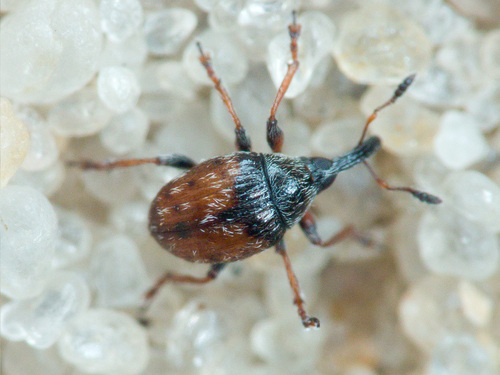
Nanophyes globulus
Photo: iNaturalist: (c) Boris Loboda, all rights reserved, uploaded by Boris Loboda
Overview
The dammkulspetsvivel (Nanophyes globulus) is a small weevil species characterized by its distinctive globular body shape and metallic sheen. This specialized beetle plays an important ecological role as both a pollinator of certain flowering plants and as prey for insectivorous birds and spiders in its native habitat.
Nanophyes globulus faces significant threats from habitat degradation and agricultural intensification across its range. The species' dependence on specific host plants makes it particularly vulnerable to changes in vegetation composition and land use practices that reduce the availability of suitable breeding sites.
Habitat
This small weevil inhabits agricultural areas, field margins, and semi-natural grasslands where its host plants in the family Polygonaceae occur. The species is typically found in disturbed habitats including cultivated fields, ruderal areas, and along roadsides at various elevations.
Threatened in Czechia

Frequently asked questions
Why is Nanophyes globulus classified as Vulnerable?
Where does Nanophyes globulus live?
What are the main threats to Nanophyes globulus?
Get weekly conservation intelligence
One short digest a week of the most striking species and country data we ship, plus breaking conservation news paired with our database where it matters.
Free, no spam. One-click unsubscribe in every email.