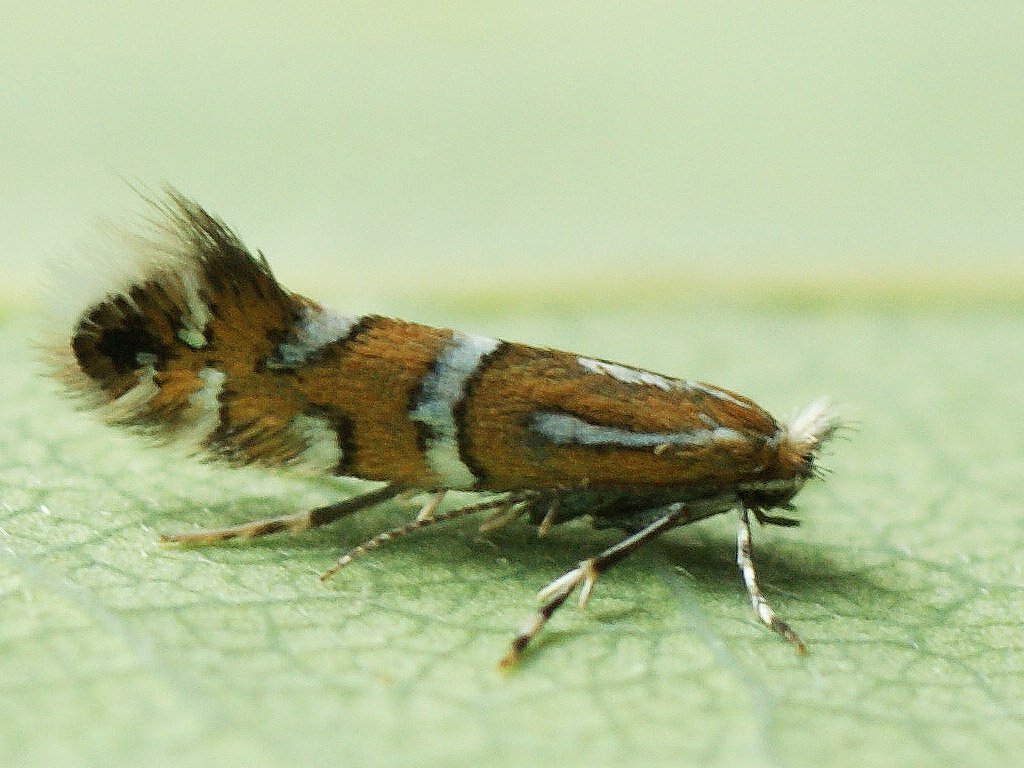
Clover midget
Phyllonorycter insignitella
Photo: Wikimedia Commons (CC) via https://en.wikipedia.org/wiki/Phyllonorycter_insignitella
Overview
Phyllonorycter insignitella is a moth of the family Gracillariidae. It is found in all of Europe, except the Balkan Peninsula.
The Clover midget (Phyllonorycter insignitella) faces severe population decline primarily due to habitat loss and degradation of its specialized clover host plants. Agricultural intensification, including the use of pesticides and conversion of traditional grasslands, has significantly reduced suitable breeding sites. Climate change may also be affecting the synchronization between the moth's life cycle and its host plant availability.
Other threatened species in Gracillariidae


Threatened in Åland Islands


Frequently asked questions
Why is Clover midget classified as Critically Endangered?
Where does Clover midget live?
What are the main threats to Clover midget?
Get weekly conservation intelligence
One short digest a week of the most striking species and country data we ship, plus breaking conservation news paired with our database where it matters.
Free, no spam. One-click unsubscribe in every email.