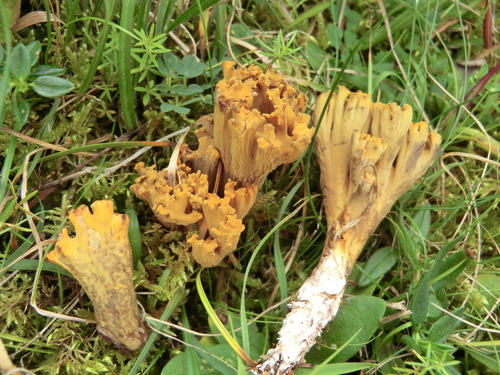
blackening coral
Phaeoclavulina macrospora
Photo: iNaturalist: (c) eikeh99, some rights reserved (CC BY-NC), uploaded by eikeh99
Overview
Clavaire noircissante is a distinctive coral fungus characterized by its branched, club-like fruiting bodies that darken to black when bruised or aged, giving it its common name. This saprobic fungus plays a crucial ecological role in forest ecosystems by decomposing organic matter and recycling nutrients back into the soil. Its relatively large spores distinguish it from closely related species in the Clavariaceae family.
Phaeoclavulina macrospora faces severe decline primarily due to habitat loss from deforestation and forest fragmentation in its limited range. The species is particularly vulnerable due to its specialized ecological requirements and small population size, making it highly susceptible to environmental changes and human disturbance.
Habitat
Clavaire noircissante typically grows in mature deciduous and mixed forests, particularly in areas with rich, moist humus and abundant leaf litter. It favors shaded woodland floors with stable moisture levels and minimal soil disturbance, often appearing in small groups among decomposing organic debris.
Other threatened species in Gomphaceae


Frequently asked questions
Why is blackening coral classified as Endangered?
Where does blackening coral live?
What are the main threats to blackening coral?
Get weekly conservation intelligence
One short digest a week of the most striking species and country data we ship, plus breaking conservation news paired with our database where it matters.
Free, no spam. One-click unsubscribe in every email.