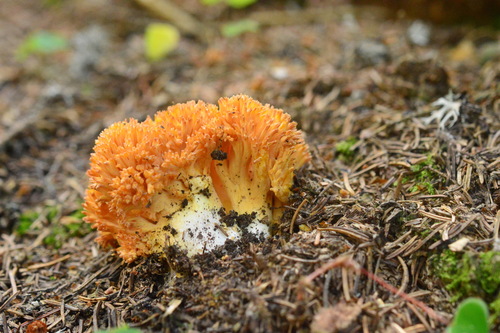
Ramaria brunneicontusa
Photo: Photo: (c) jelenaflg, some rights reserved (CC BY-NC)
Overview
Ramaria brunneicontusa, known as gullkorallsopp, is a distinctive coral fungus characterized by its branching, coral-like fruiting bodies with yellowish stems and brownish-tinged branch tips. This saprobic fungus plays a crucial ecological role in forest ecosystems by decomposing organic matter and recycling nutrients back into the soil.
Ramaria brunneicontusa (gullkorallsopp) is critically endangered primarily due to habitat loss and degradation of old-growth forests where this coral fungus species depends on specific mycorrhizal relationships. The species has extremely limited distribution and appears to be highly sensitive to environmental changes, making it vulnerable to extinction from even minor habitat disturbances.
Habitat
Ramaria brunneicontusa occurs in mature coniferous and mixed forests, particularly favoring areas with rich humus layers and decaying wood debris. The species requires stable, humid microenvironments typically found in undisturbed forest floors with dense canopy cover.
Other threatened species in Gomphaceae


Frequently asked questions
Why is Ramaria brunneicontusa classified as Critically Endangered?
Where does Ramaria brunneicontusa live?
What are the main threats to Ramaria brunneicontusa?
Get weekly conservation intelligence
One short digest a week of the most striking species and country data we ship, plus breaking conservation news paired with our database where it matters.
Free, no spam. One-click unsubscribe in every email.