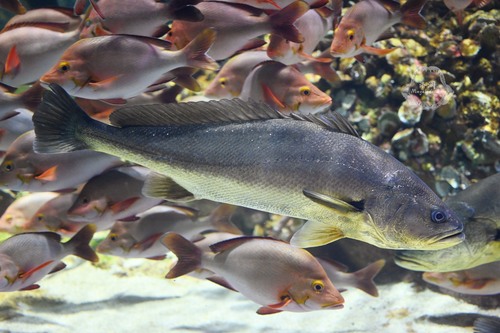
Chinese Bahaba
Bahaba taipingensis
Photo: Photo: (c) Eric.L.Chen, some rights reserved (CC BY-NC), uploaded by Eric.L.Chen
Overview
Bahaba taipingensis, commonly known as the Chinese bahaba or giant yellow croaker, is a large marine fish species endemic to the coastal waters of the South China Sea, particularly around China's Pearl River estuary and adjacent areas. This critically endangered species belongs to the drum family (Sciaenidae) and can grow to substantial sizes, making it historically valuable both commercially and culturally. The species inhabits shallow coastal waters and estuaries, where it relies on specific environmental conditions for feeding and reproduction.
Bahaba taipingensis faces severe population decline due to intensive overfishing driven by extremely high market demand, particularly in traditional Chinese medicine and luxury food markets. The species' slow growth rate, late sexual maturity, and specific habitat requirements make it particularly vulnerable to exploitation and environmental changes. Habitat degradation from coastal development, pollution, and altered river flows has further compromised its survival prospects.
The Chinese government has implemented fishing restrictions and included the species in national protection lists, but enforcement remains challenging. Conservation efforts include artificial breeding programs and habitat restoration initiatives, though success has been limited. The species' rarity has paradoxically increased its market value, creating continued incentives for illegal fishing.
Recovery prospects remain uncertain due to the combination of biological constraints, ongoing threats, and the species' extremely depleted population status.
Bahaba taipingensis faces severe overfishing pressure due to extremely high market demand for traditional medicine and luxury consumption. Coastal habitat degradation from development and pollution has reduced suitable breeding and feeding areas. The species' slow reproduction rate makes population recovery particularly difficult under continued exploitation pressure.
Habitat
Bahaba taipingensis inhabits shallow coastal waters and estuaries in the South China Sea, particularly around the Pearl River delta region. The species requires specific salinity and temperature conditions found in nearshore marine environments with access to river systems.
Conservation measures underway
Other threatened species in SCIAENIDAE


Threatened in China
Frequently asked questions
Why is Chinese Bahaba classified as Critically Endangered?
Where does Chinese Bahaba live?
What are the main threats to Chinese Bahaba?
Get weekly conservation intelligence
One short digest a week of the most striking species and country data we ship, plus breaking conservation news paired with our database where it matters.
Free, no spam. One-click unsubscribe in every email.