Canasi Frog
Eleutherodactylus blairhedgesi
Overview
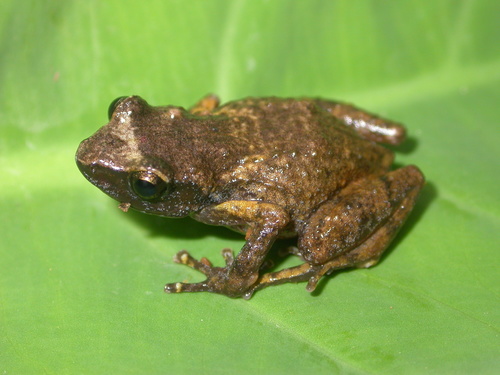
Eleutherodactylus blairhedgesi is a critically endangered frog species endemic to Haiti in the Caribbean. This small terrestrial frog belongs to the diverse genus Eleutherodactylus, commonly known as rain frogs or coquis, which are characterized by their direct development without a free-swimming tadpole stage. The species was named in honor of herpetologist S.
Blair Hedges for his contributions to Caribbean amphibian research. E. blairhedgesi inhabits montane forests in Haiti, where it depends on specific microhabitat conditions including appropriate moisture levels, temperature ranges, and forest structure.
The species faces severe threats from widespread deforestation and habitat degradation throughout its limited range. Haiti has experienced extensive forest loss due to agricultural expansion, charcoal production, and human settlement, leaving only fragmented patches of suitable habitat. Climate change poses additional risks through altered precipitation patterns and temperature increases that may exceed the species' physiological tolerances.
The frog's restricted distribution makes it particularly vulnerable to environmental changes and human activities. Population monitoring indicates a declining trend, though comprehensive surveys remain challenging due to the species' secretive nature and the difficult terrain it inhabits. Conservation efforts for this species are limited by Haiti's socioeconomic challenges and competing land use pressures.
Habitat protection and restoration initiatives would be essential for the species' survival, along with community-based conservation programs that address local needs while preserving remaining forest fragments.
Eleutherodactylus blairhedgesi faces severe threats from deforestation and habitat degradation throughout its limited range in Haiti. Agricultural expansion, charcoal production, and human settlement have resulted in extensive forest loss, leaving only fragmented patches of suitable habitat. Climate change compounds these pressures through altered precipitation patterns and rising temperatures that may exceed the species' tolerance limits.
Habitat
This species inhabits montane forests in Haiti, requiring specific microhabitat conditions including appropriate moisture levels and forest structure. The frog depends on intact forest ecosystems that provide suitable temperature ranges and humidity for its survival and reproduction.
Conservation measures underway
Other threatened species in ELEUTHERODACTYLIDAE

Threatened in Cuba
Frequently asked questions
Why is Canasi Frog classified as Critically Endangered?
Where does Canasi Frog live?
What are the main threats to Canasi Frog?
Get weekly conservation intelligence
One short digest a week of the most striking species and country data we ship, plus breaking conservation news paired with our database where it matters.
Free, no spam. One-click unsubscribe in every email.