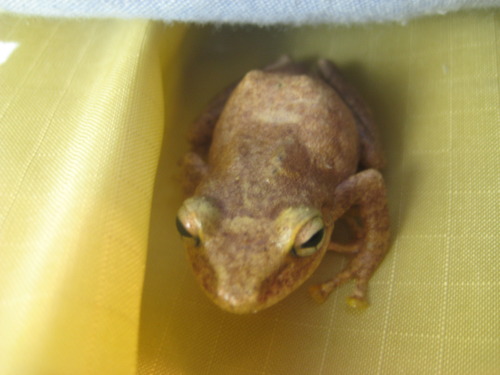
Patternless Whistling Frog
Eleutherodactylus diplasius
Photo: (c) Chris Searle, some rights reserved (CC BY), uploaded by Chris Searle
Overview
Eleutherodactylus diplasius is a critically endangered frog species endemic to Haiti in the Caribbean. This small terrestrial frog belongs to the diverse genus Eleutherodactylus, commonly known as rain frogs or coquis, which are characterized by their direct development without a free-swimming tadpole stage. The species inhabits montane forests in Haiti's mountainous regions, where it depends on specific microhabitat conditions including appropriate moisture levels, temperature ranges, and forest structure.
Like many Caribbean endemic amphibians, E. diplasius faces severe threats from habitat destruction and fragmentation due to deforestation, agricultural expansion, and human settlement development. Haiti has experienced extensive forest loss, with much of its original forest cover cleared for agriculture, charcoal production, and urban development, leaving only small fragments of suitable habitat for forest-dependent species.
The species may also be vulnerable to climate change impacts, including altered precipitation patterns and temperature increases that could affect the delicate moisture balance required for its survival and reproduction. Additionally, the potential presence of chytrid fungus, a pathogenic disease that has devastated amphibian populations worldwide, poses an ongoing threat to Haitian frog species. Conservation efforts for E.
diplasius are limited by Haiti's challenging socioeconomic conditions and limited resources for biodiversity protection. The species' critically endangered status reflects the urgent need for habitat protection and restoration initiatives, though specific conservation programs targeting this species are not well documented. Research into the species' current distribution, population status, and ecological requirements remains essential for developing effective conservation strategies.
Eleutherodactylus diplasius faces severe threats from widespread deforestation and habitat destruction in Haiti, where forest clearing for agriculture, charcoal production, and development has eliminated much of its montane forest habitat. The species may also be vulnerable to climate change impacts and potential disease threats such as chytrid fungus.
Habitat
This species inhabits montane forests in Haiti's mountainous regions. It requires specific forest microhabitat conditions including appropriate moisture levels and intact forest structure for survival and reproduction.
Conservation measures underway
Other threatened species in ELEUTHERODACTYLIDAE

Threatened in Haiti
Frequently asked questions
Why is Patternless Whistling Frog classified as Critically Endangered?
Where does Patternless Whistling Frog live?
What are the main threats to Patternless Whistling Frog?
Get weekly conservation intelligence
One short digest a week of the most striking species and country data we ship, plus breaking conservation news paired with our database where it matters.
Free, no spam. One-click unsubscribe in every email.