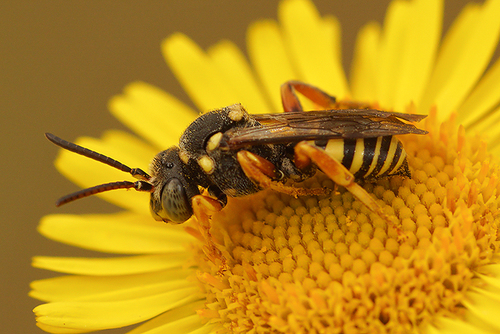
Blunthorn Nomad Bee
Nomada flavopicta
Photo: iNaturalist: (c) Henk Wallays, all rights reserved, uploaded by Henk Wallays
Overview
The Blunthorn Nomad Bee (Nomada flavopicta) is a cuckoo bee species characterized by its distinctive yellow and black markings and relatively blunt antennal segments that give it its common name. As a cleptoparasitic species, it does not collect pollen itself but instead lays its eggs in the nests of solitary ground-nesting bees, where its larvae consume the host's provisions. This specialized lifestyle makes it an important component of native bee community dynamics and pollination networks.
The Blunthorn Nomad Bee faces significant threats from habitat loss due to agricultural intensification and urban development, which reduces availability of both host bee species and floral resources. Climate change and pesticide use further compound these pressures, disrupting the delicate ecological relationships this cuckoo bee depends on for survival.
Habitat
Open grasslands, meadows, heathlands, and woodland edges with abundant flowering plants, particularly in areas where host Andrena bee species nest in sandy or well-drained soils. This species is typically found in semi-natural habitats across Europe, including coastal dunes, chalk downs, and traditional agricultural landscapes.
Other threatened species in Apidae
Threatened in Afghanistan

Frequently asked questions
Why is Blunthorn Nomad Bee classified as Vulnerable?
Where does Blunthorn Nomad Bee live?
What are the main threats to Blunthorn Nomad Bee?
Get weekly conservation intelligence
One short digest a week of the most striking species and country data we ship, plus breaking conservation news paired with our database where it matters.
Free, no spam. One-click unsubscribe in every email.