
Blacktip Shark
Carcharhinus limbatus
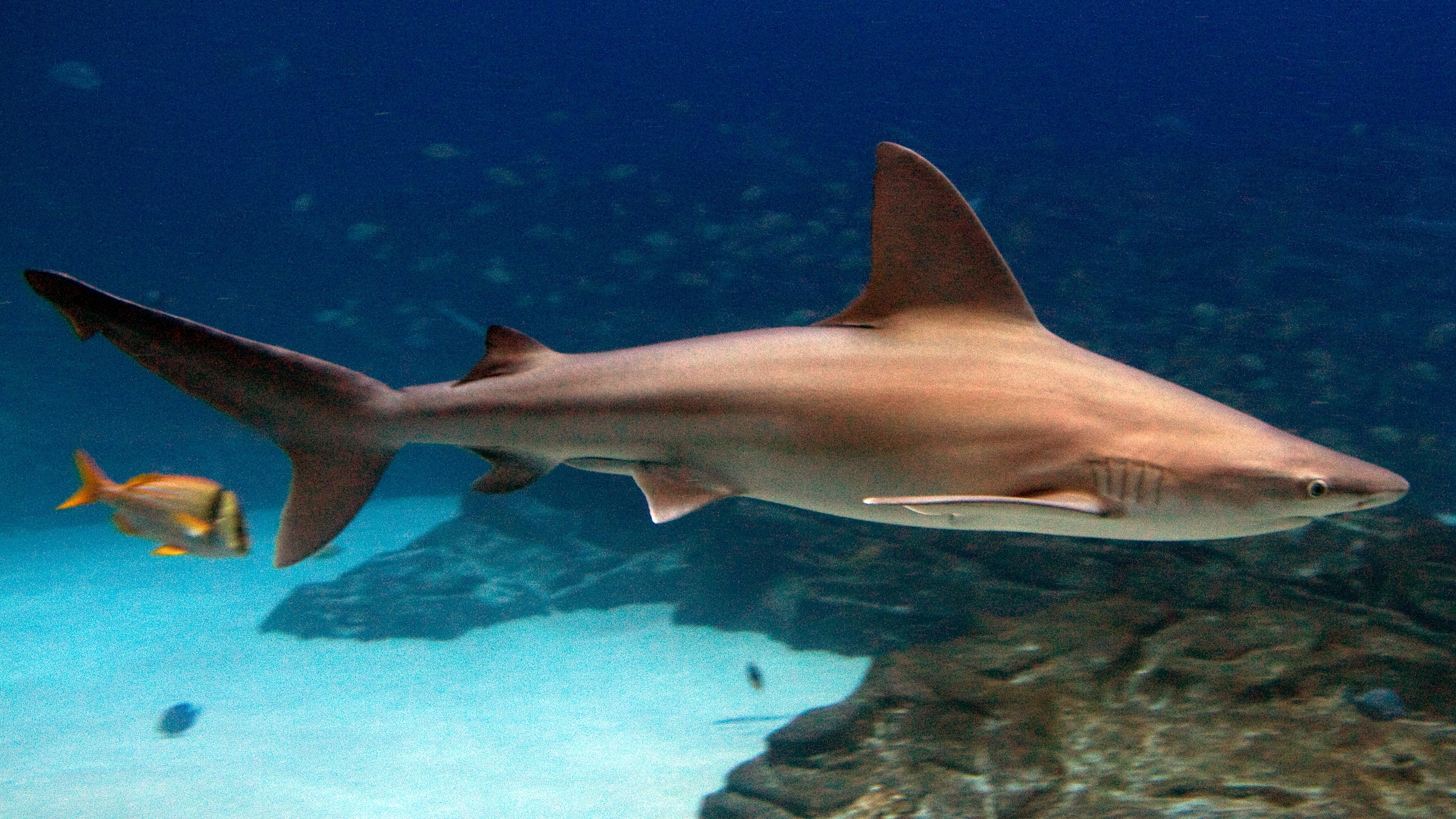
Photo: Wikimedia Commons (CC) via https://en.wikipedia.org/wiki/Blacktip_shark
Overview
Carcharhinus limbatus is a medium-sized requiem shark recognized by its slender, streamlined body, bronze-grey coloration, and the characteristic black tips on its fins, particularly visible on the dorsal fin, pectoral fins, and tail. Adults typically reach 1.5 to 2.5 meters in length. Known for occasional spinning leaps out of the water while feeding, this species preys primarily on small bony fishes, rays, and cephalopods, positioning it as a mid-to-upper trophic level predator that helps regulate prey populations and maintain balance within coastal marine food webs.
The species has a broad circumtropical and subtropical distribution, inhabiting coastal and shelf waters across the Atlantic, Indian, and Pacific Oceans. It frequents shallow inshore areas, estuaries, and river mouths, as well as rocky reefs and neritic and oceanic marine zones, with juveniles often using shallow nursery habitats before moving to deeper water as they mature.
Population declines are driven primarily by targeted and incidental capture in commercial and artisanal fisheries, where it is caught for its meat and fins. Habitat degradation from coastal development and shoreline alteration, pollution of unrecorded origin, and mangrove loss linked to logging further reduce the availability and quality of nursery habitats essential to juvenile survival.
Conservation efforts include regional fisheries management measures, catch limits, and finning bans in some jurisdictions, along with habitat protections in select marine protected areas. Monitoring programs continue to track population trends across parts of its range.
Given ongoing fishing pressure and continued habitat loss across much of its extensive range, the population trend remains decreasing, and the species' long-term recovery depends on stronger enforcement of existing management measures and expanded habitat protection.
Blacktip Sharks face the greatest danger from being caught in commercial and recreational fishing nets and lines, whether that's targeted catches or accidental bycatch. They're also affected by changes to their coastal habitats, some unspecified forms of water pollution, and the clearing of coastal forests (such as mangroves) that likely serve as nursery areas for young sharks. All of these pressures are currently ongoing and show no signs of letting up.
Habitat
Conservation measures underway
Other threatened species in CARCHARHINIDAE

Threatened in Angola



Frequently asked questions
Why is Blacktip Shark classified as Vulnerable?
Where does Blacktip Shark live?
What are the main threats to Blacktip Shark?
Get weekly conservation intelligence
One short digest a week of the most striking species and country data we ship, plus breaking conservation news paired with our database where it matters.
Free, no spam. One-click unsubscribe in every email.