
Blacktip Reef Shark
Carcharhinus melanopterus
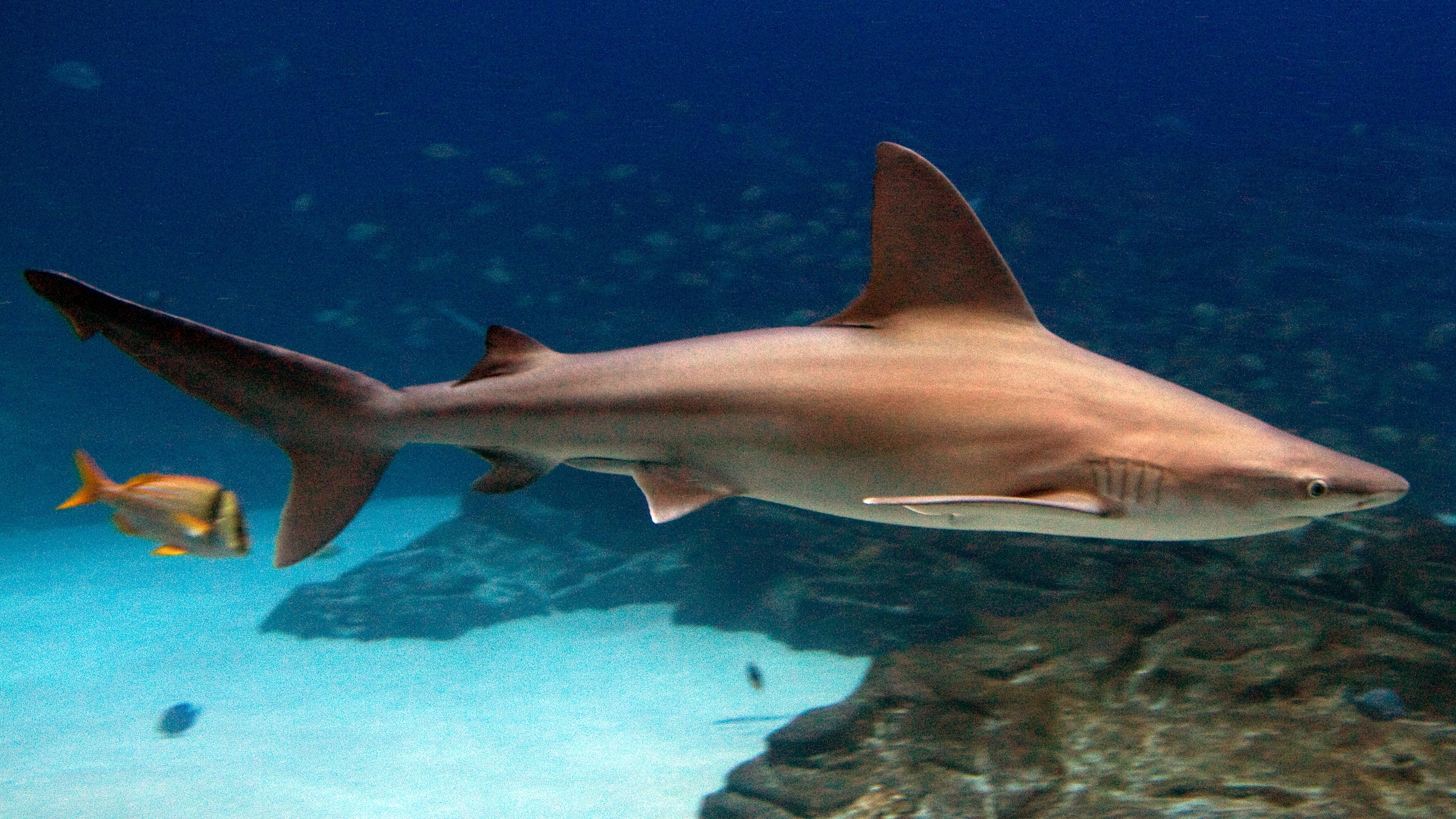
Photo: Wikimedia Commons (CC) via https://en.wikipedia.org/wiki/Blacktip_reef_shark
Overview
The Blacktip Reef Shark is a small, slender shark easily identified by the black tips marking its dorsal, pectoral, and caudal fins, set against a grey-brown body and pale underside. Typically reaching around 1.6 to 1.8 meters in length, it is a fast-moving predator feeding on small bony fishes, cephalopods, and crustaceans found along reef edges. As a mid-level predator, it helps regulate prey populations and contributes to the overall balance of reef food webs, making it an important indicator species for reef health.
This shark is widely distributed across the tropical and subtropical Indo-Pacific, with populations extending into parts of the Atlantic through range countries such as Brazil and the Caribbean. It favors shallow coastal waters, coral reef flats, lagoons, and mangrove habitats, often entering very shallow water near shorelines, which makes it one of the most frequently encountered reef sharks by humans.
Population declines are driven primarily by targeted and incidental capture in artisanal and commercial fisheries, where it is taken for meat and fins. Increasing recreational and tourism-related activities in shallow reef habitats add further pressure through disturbance and localized exploitation. Habitat degradation, including mangrove clearing and reef alteration linked to coastal development and climate-related shifts, is reducing nursery and feeding grounds essential to juveniles.
Conservation efforts include regional shark fishing regulations, marine protected areas, and shark sanctuaries established in several Pacific and Indian Ocean nations, along with international trade monitoring under CITES for related shark species. Enforcement and habitat protection remain inconsistent across its range.
Given continued fishing pressure and habitat loss throughout much of its distribution, the species' population trend remains decreasing, and its conservation status is likely to remain a concern without stronger regional protections.
Blacktip Reef Sharks are mainly caught, both commercially and accidentally, in fishing nets and lines throughout their coastal habitats. They also face disturbance from recreational activities such as diving, boating, and tourism in the shallow reef areas where they live, as well as ongoing changes to their reef habitats caused by shifting coastal and marine conditions. These pressures appear to be ongoing and continuing at a steady pace rather than clearly increasing or decreasing.
Habitat
Conservation measures underway
Other threatened species in CARCHARHINIDAE

Threatened in Algeria


Frequently asked questions
Why is Blacktip Reef Shark classified as Vulnerable?
Where does Blacktip Reef Shark live?
What are the main threats to Blacktip Reef Shark?
Get weekly conservation intelligence
One short digest a week of the most striking species and country data we ship, plus breaking conservation news paired with our database where it matters.
Free, no spam. One-click unsubscribe in every email.