
Black Stubble Lichen
Calicium abietinum
Photo: Wikimedia Commons (CC) via https://en.wikipedia.org/wiki/Calicium_abietinum
Overview
Black Stubble Lichen (Calicium abietinum)
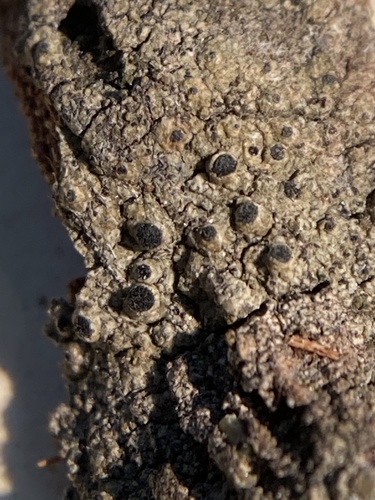
Black Stubble Lichen is a distinctive crustose lichen characterized by its dark, pin-like fruiting bodies (apothecia) that resemble tiny black stubble emerging from tree bark. The species forms thin, often inconspicuous crusts on its host substrate, with the prominent dark stalked structures containing spores for reproduction. As a lichen, it represents a symbiotic relationship between fungi and algae, playing a crucial role in forest ecosystems by contributing to nutrient cycling and providing microhabitats for invertebrates.
This species demonstrates remarkable global distribution, occurring across multiple continents from boreal forests in Scandinavia and Canada to temperate regions in Europe, Asia, and extending into tropical areas of Central and South America. It primarily colonizes the bark of coniferous trees, particularly favoring older forest stands with stable microclimatic conditions. The lichen shows preference for areas with consistent humidity and minimal disturbance.
Despite its wide geographic range, Black Stubble Lichen faces mounting pressures from habitat fragmentation and forest management practices that favor younger tree stands. Air pollution, particularly nitrogen deposition and sulfur compounds, significantly impacts lichen communities. Climate change poses additional challenges through altered precipitation patterns and temperature fluctuations that disrupt the delicate moisture balance required for survival.
Current conservation efforts focus primarily on forest preservation and sustainable forestry practices that maintain older tree populations. Some countries include the species in biodiversity monitoring programs, though comprehensive assessment remains limited.
The species' outlook remains uncertain due to insufficient population data and continued habitat pressures, warranting enhanced monitoring and targeted conservation strategies.
Black Stubble Lichen is declining primarily due to habitat loss from deforestation and forest fragmentation, which eliminates the old-growth coniferous forests it requires. Air pollution, particularly acid rain and nitrogen deposition, further degrades its specialized habitat and directly impacts lichen health.
Habitat
Other threatened species in Caliciaceae
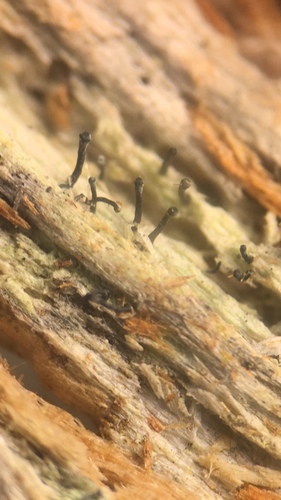
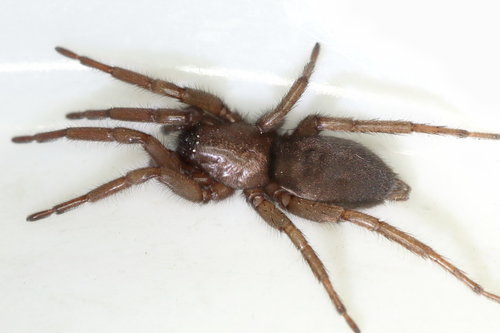
Threatened in Åland Islands


Frequently asked questions
Why is Black Stubble Lichen classified as Vulnerable?
Where does Black Stubble Lichen live?
What are the main threats to Black Stubble Lichen?
Get weekly conservation intelligence
One short digest a week of the most striking species and country data we ship, plus breaking conservation news paired with our database where it matters.
Free, no spam. One-click unsubscribe in every email.