Barbut's Cuckoo-bee
ENEndangered

Barbut's Cuckoo-bee

Bombus barbutellus

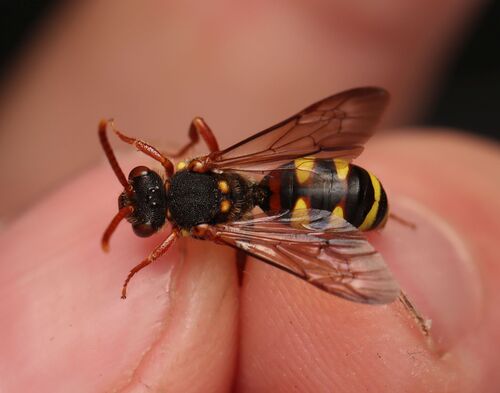
Bombus barbutellus, or Barbut's cuckoo-bee, is a species of cuckoo bumblebee, widespread, if not especially common, in most of Europe.

42

Countries

Photo: Wikimedia Commons (CC) via https://en.wikipedia.org/wiki/Bombus_barbutellus

01Classification

Taxonomy & Classification

Kingdom

Animalia

Phylum

Arthropoda

Class

Insecta

Order

Hymenoptera

Family

Apidae

Genus

Bombus

Barbut's Cuckoo-bee belongs to the family Apidae, order Hymenoptera, within the Insecta class.

02Description

Species Profile

Bombus barbutellus, or Barbut's cuckoo-bee, is a species of cuckoo bumblebee, widespread, if not especially common, in most of Europe.

Barbut's Cuckoo-bee faces severe population declines primarily due to habitat loss from agricultural intensification and urbanization, which destroys the flower-rich grasslands and meadows it depends on. The species is also threatened by the decline of its host bumblebee species, as cuckoo bees are obligate social parasites that cannot survive without their hosts.

Key Facts

IUCN StatusEndangered (EN)
GroupInsects
03Habitat

Habitat & Distribution

As a cuckoo bumblebee, B. barbutellus does not build any nest of its own, but usurps the nests of other bumblebees, killing the queen and forcing the workers to raise its own offspring. The main hosts are B. hortorum, B. ruderatus, and B. argillaceus. Favourite food sources are flowering plants such as thistles; the queen also visits white deadnettle and vetches, while the male feeds on bramble,...

04Threats

Threats

!

IUCN Red List: Endangered

Barbut's Cuckoo-bee faces severe population declines primarily due to habitat loss from agricultural intensification and urbanization, which destroys the flower-rich grasslands and meadows it depends on. The species is also threatened by the decline of its host bumblebee species, as cuckoo bees are obligate social parasites that cannot survive without their hosts.

Agricultural intensification and habitat loss

HighOngoing

Decline of host bumblebee species

HighOngoing

Loss of flower-rich foraging areas

HighOngoing

Climate change impacts on habitat suitability

MediumOngoing

Urbanization and development

MediumOngoing
07National Status

National vs Global Threat Status

How this species is assessed at the national level compared to its IUCN global status (EN).

CountryNational StatusGlobal StatusComparison
EULCLeast ConcernENEndangeredLower local risk

National Red List data sourced from the National Red List Project (nationalredlist.org, ZSL) and country-specific Red List authorities.

Community

Community Sightings

Report a sighting

No community sightings yet. Be the first to report!

07Sources

Sources & Attribution

How to Cite

IUCN: IUCN (2025). The IUCN Red List of Threatened Species. Version 2025-1. Available at: https://www.iucnredlist.org. doi:10.2305/IUCN.UK.2025-1.RLTS

GBIF: GBIF.org (2025). GBIF Home Page. Available at: https://www.gbif.org

National Red Lists: ZSL (2025). National Red List. Zoological Society of London. Available at: https://www.nationalredlist.org

This page: SpeciesRadar (2025). Barbut's Cuckoo-bee (Bombus barbutellus). SpeciesRadar: Intelligence for Earth's Biodiversity. Available at: https://speciesradar.org/species/barbuts-cuckoo-bee

Full citation guide & data usage terms