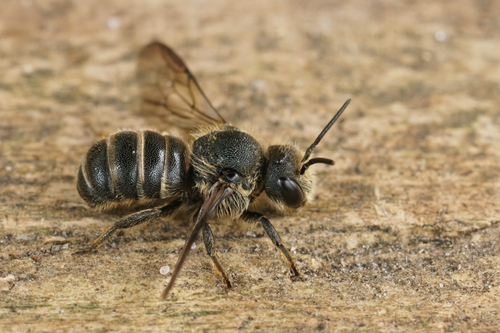
Banded Dark Bee
Stelis punctulatissima
Photo: iNaturalist: (c) Henk Wallays, all rights reserved, uploaded by Henk Wallays
Overview
The Banded Dark-Bee (Stelis punctulatissima) is a small, solitary cuckoo bee characterized by its dark metallic body with distinctive pale banding across the abdomen and densely punctured surface texture. As a kleptoparasitic species, it does not collect pollen itself but instead lays its eggs in the nests of other solitary bees, where its larvae consume the host's provisions.
The Banded Dark-Bee faces significant threats from habitat loss and fragmentation due to agricultural expansion and urbanization across its range. Climate change poses additional risks by altering flowering patterns of host plants and shifting suitable habitat zones, while pesticide use in agricultural areas directly impacts both the species and its food sources.
Habitat
This species inhabits Mediterranean scrublands, dry grasslands, and semi-arid regions with abundant flowering plants, typically found in areas with suitable nesting substrates such as plant stems and cavities. It shows preference for open habitats with diverse native flora at elevations ranging from sea level to approximately 1,500 meters.
Other threatened species in Megachilidae
Threatened in Åland Islands


Frequently asked questions
Why is Banded Dark Bee classified as Vulnerable?
Where does Banded Dark Bee live?
What are the main threats to Banded Dark Bee?
Get weekly conservation intelligence
One short digest a week of the most striking species and country data we ship, plus breaking conservation news paired with our database where it matters.
Free, no spam. One-click unsubscribe in every email.