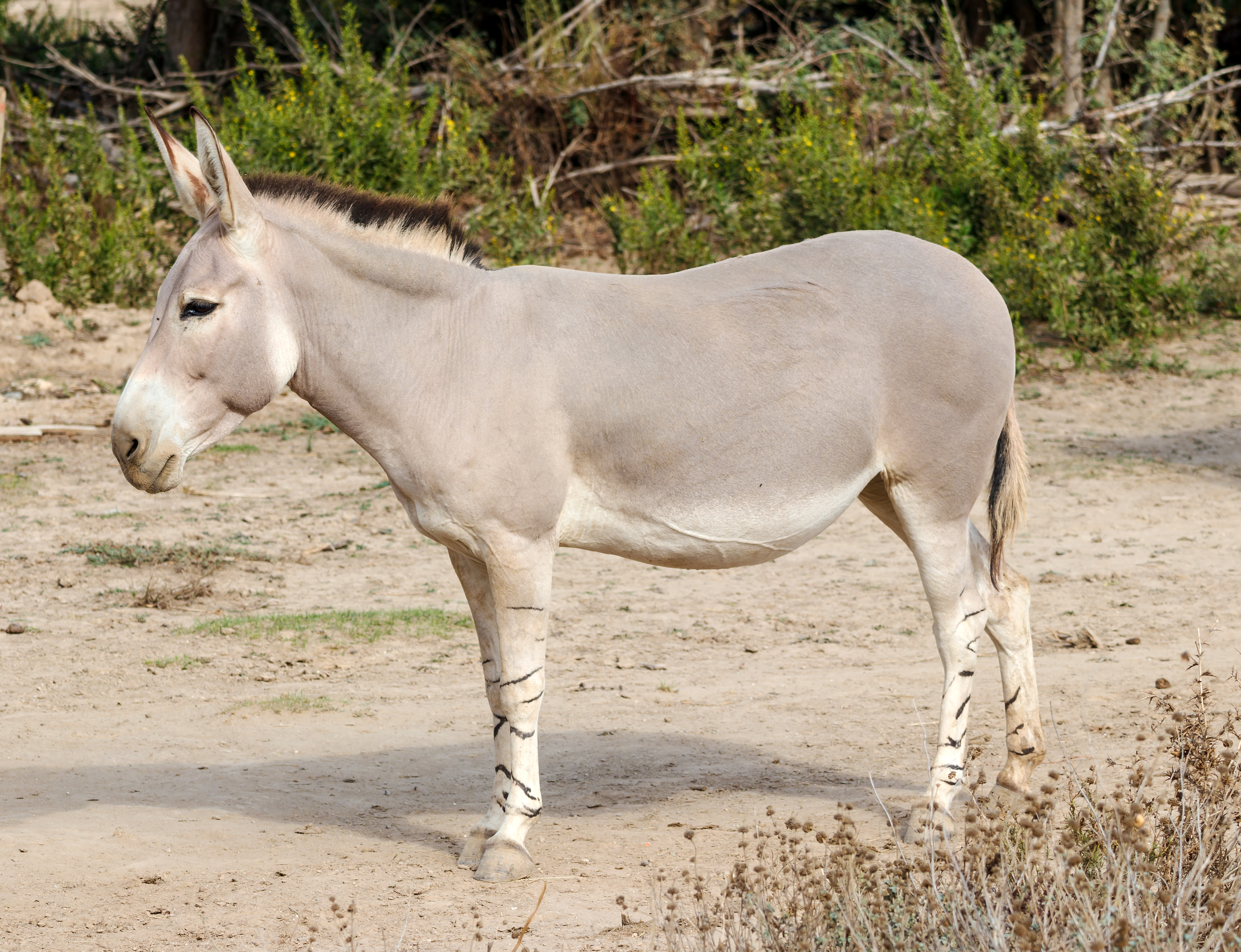
African Wild Ass
Equus africanus
Photo: Wikimedia Commons (CC) via https://en.wikipedia.org/wiki/African_wild_ass
Overview
Equus africanus, commonly known as the African wild ass, stands as one of Africa's most critically endangered large mammals. This robust equid displays a distinctive pale gray to sandy-brown coat with darker dorsal stripe and leg markings, standing approximately 125-145 cm at the shoulder. Two subspecies are recognized: the Nubian wild ass (E.
a. africanus) and the Somali wild ass (E. a.
somaliensis), with the latter distinguished by prominent black zebra-like stripes on its legs. These hardy animals inhabit the arid and semi-arid regions of northeastern Africa, including parts of Eritrea, Ethiopia, and Somalia, where they demonstrate remarkable adaptation to extreme desert conditions. African wild asses can survive without water for several days and navigate rocky, mountainous terrain with exceptional agility.
Their social structure consists of small groups led by dominant stallions, with females and young forming loose associations. The species is classified as Critically Endangered by the IUCN, with fewer than 600 individuals estimated to remain in the wild. Despite their precarious status, recent conservation efforts have shown promise, including the establishment of protected areas in Eritrea and collaborative breeding programs that maintain genetic diversity.
Community-based conservation initiatives in Somalia have also engaged local pastoralists in protection efforts, creating hope for the species' long-term survival.
The African wild ass faces severe population decline primarily due to hybridization with domestic donkeys, which threatens the genetic integrity of wild populations. Hunting for traditional medicine, where various body parts are believed to have medicinal properties, has significantly reduced numbers across their range. Competition with livestock for scarce water sources and grazing areas in their arid habitat, combined with habitat fragmentation from human settlement expansion, continues to restrict their already limited range.
Habitat
African wild asses inhabit extremely arid mountainous and semi-desert regions of northeastern Africa, favoring rocky hills, stone deserts, and sparse grasslands. They are particularly adapted to areas receiving less than 200mm of annual rainfall, where they utilize seasonal water sources and browse on drought-resistant vegetation including grasses, herbs, and shrubs.
Conservation measures underway
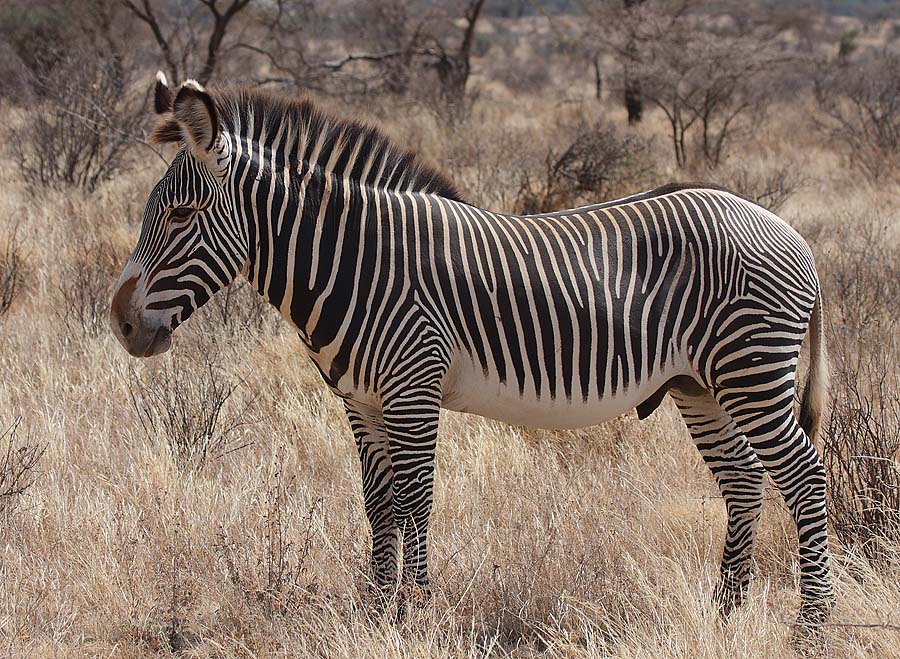
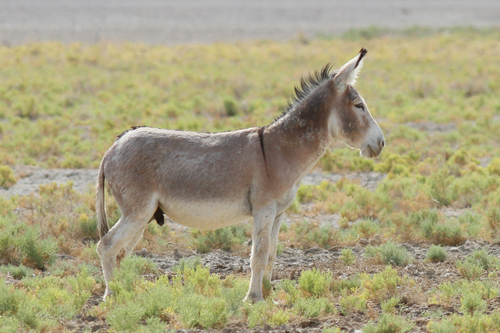
Other threatened species in EQUIDAE

Threatened in Caribbean Netherlands


Frequently asked questions
Why is African Wild Ass classified as Critically Endangered?
Where does African Wild Ass live?
What are the main threats to African Wild Ass?
Get weekly conservation intelligence
One short digest a week of the most striking species and country data we ship, plus breaking conservation news paired with our database where it matters.
Free, no spam. One-click unsubscribe in every email.