Species Explorer
Browse and search species from the IUCN Red List and GBIF.
54,666 species
Faramea scalaris
ENFaramea scalaris
Plinia nicaraguensis
ENPlinia nicaraguensis
Styrax steyermarkii
ENStyrax steyermarkii
Palicourea chiriquina
VUPalicourea chiriquina
Orthion guatemalense
ENOrthion guatemalense
Palicourea pereziana
ENPalicourea pereziana
Pelophylax cerigensis
ENPelophylax cerigensis
Rana chevronta
CRRana chevronta
Rana chevronta faces severe population declines due to habitat destruction from deforestation and agricultural expansion across its limited range. The species is particularly vulnerable to water pollution and climate-induced changes to precipitation patterns that affect its breeding habitats. Disease outbreaks, including chytrid fungus infections that have devastated amphibian populations globally, pose additional critical threats to remaining populations.
Camellia cupiformis
CRCamellia cupiformis
Camellia cupiformis faces severe threats from habitat destruction due to deforestation and agricultural expansion in its native range in China. The species has an extremely limited distribution and small population size, making it highly vulnerable to local extinctions from human activities and environmental changes.
Psychotria jefensis
ENPsychotria jefensis
Meliosma isthmensis
VUMeliosma isthmensis
Dendropsophus amicorum
CRDendropsophus amicorum
Dendropsophus amicorum faces severe threats from habitat destruction due to deforestation and agricultural expansion in its limited range. The species' small population size and restricted distribution make it extremely vulnerable to environmental changes and human activities that fragment its forest habitat.
Eugenia sancarlosensis
ENEugenia sancarlosensis
Pleurothyrium palmanum
VUPleurothyrium palmanum
Prunus fortunensis
VUPrunus fortunensis
Palicourea carnosocarpa
ENPalicourea carnosocarpa
Heleophryne rosei
ENHeleophryne rosei
Dendropsophus gryllatus
ENDendropsophus gryllatus
Stephanodaphne cuspidata
VUStephanodaphne cuspidata
Hyloscirtus colymba
ENHyloscirtus colymba
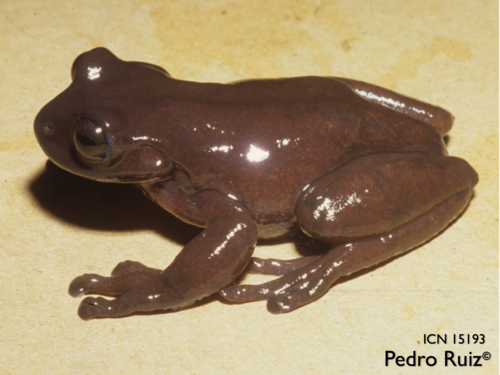
Hyloscirtus lynchi
CRHyloscirtus lynchi
Hyloscirtus lynchi faces severe threats from habitat destruction due to deforestation, agricultural expansion, and human settlement development throughout its limited range in the Andean cloud forests. The species is particularly vulnerable due to its restricted distribution and specialized habitat requirements, making populations highly susceptible to local extinctions from environmental degradation and climate change impacts on montane ecosystems.
Hyloscirtus ptychodactylus
ENHyloscirtus ptychodactylus
Palicourea hammelii
VUPalicourea hammelii
Blakea grandiflora
VUBlakea grandiflora
Randia pittieri
ENRandia pittieri
Palicourea skotakii
VUPalicourea skotakii
Coussarea duplex
ENCoussarea duplex
Randia grayumii
VURandia grayumii
Brunellia standleyana
VUBrunellia standleyana
Hyloxalus bocagei
VUHyloxalus bocagei
Stephanodaphne cremostachya
VUStephanodaphne cremostachya
Daphnopsis punctulata
VUDaphnopsis punctulata
Hyloxalus exasperatus
CRHyloxalus exasperatus
Hyloxalus exasperatus faces severe threats from habitat destruction due to deforestation, agricultural expansion, and mining activities in its limited range. The species' small population size and restricted distribution make it extremely vulnerable to environmental changes and human disturbances. Climate change poses additional risks by altering the delicate moisture and temperature conditions required for this poison dart frog's survival and reproduction.
Acacia brachypoda
ENAcacia brachypoda
Oophaga lehmanni
CROophaga lehmanni
Oophaga lehmanni faces severe threats from habitat destruction due to deforestation, agricultural expansion, and urban development in its limited Colombian range. The species is further imperiled by collection for the illegal pet trade, as its striking coloration makes it highly sought after, and climate change impacts on its specialized montane forest habitat.
Brunellia costaricensis
VUBrunellia costaricensis
Eugenia herrerae
ENEugenia herrerae
Cecropia pittieri
VUCecropia pittieri
Rudgea amplexicaulis
ENRudgea amplexicaulis
Posoqueria costaricensis
VUPosoqueria costaricensis
Lagetta wrightiana
VULagetta wrightiana
Microbatrachella capensis
ENMicrobatrachella capensis
Arthroleptis nikeae
CRArthroleptis nikeae
Arthroleptis nikeae faces severe threats primarily from habitat destruction due to agricultural expansion and logging activities in its limited range. The species' extremely restricted distribution makes it particularly vulnerable to local environmental changes and human encroachment.
Centrolene medemi
ENCentrolene medemi
Cochranella euhystrix
CRCochranella euhystrix
Cochranella euhystrix faces severe threats from habitat destruction due to deforestation and agricultural expansion throughout its limited range in Central American cloud forests. The species' restricted distribution and specialized habitat requirements make it extremely vulnerable to environmental changes and human encroachment. Climate change poses an additional threat by altering the delicate moisture and temperature conditions essential for this glass frog's survival.
Sphaeromimus andrahomana
CRSphaeromimus andrahomana
The specific threats to the Andrahomana Cave Giant Pill-Millipede have not been formally assessed or documented by researchers. Without this threat assessment, it's unclear what particular dangers this cave-dwelling species faces in its underground habitat in Madagascar. The status of threats to this species - whether they are getting worse, staying the same, or improving - cannot be determined without proper scientific evaluation.
Centrolene heloderma
VUCentrolene heloderma
Leptodactylodon wildi
CRLeptodactylodon wildi
Leptodactylodon wildi faces severe threats from habitat destruction due to deforestation, agricultural expansion, and human settlement development across its limited range in West and Central Africa. The species' specialized breeding requirements in pristine forest streams make it particularly vulnerable to environmental degradation and climate change impacts on rainfall patterns.
Guettarda brenesii
ENGuettarda brenesii
Palicourea pauciflora
ENPalicourea pauciflora