
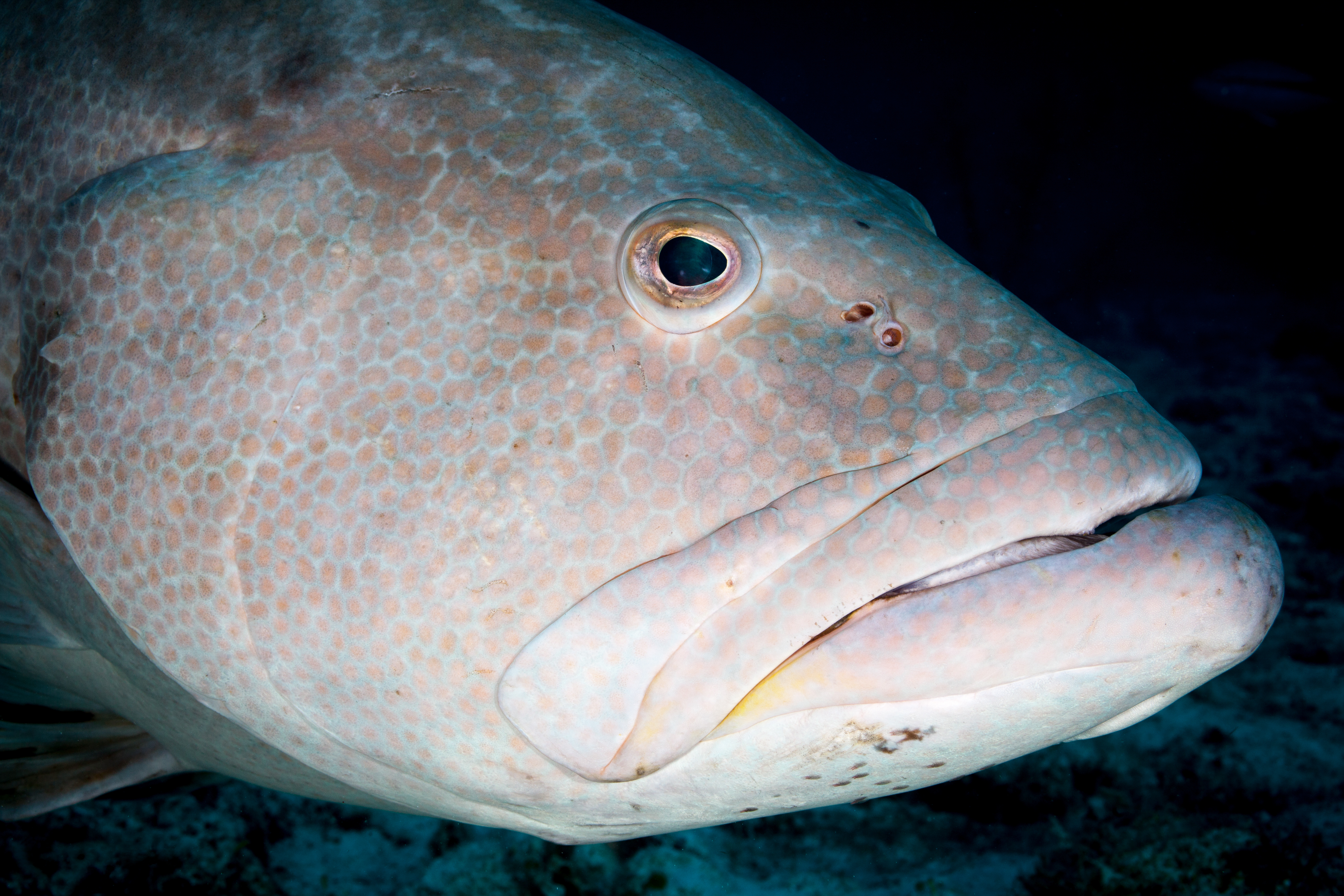
Dusky Perch
Epinephelus marginatus
Photo: Wikimedia Commons (CC) via https://en.wikipedia.org/wiki/Epinephelus_marginatus
Overview
Epinephelus marginatus is a large, long-lived grouper capable of reaching over 1.5 meters in length, though most individuals are considerably smaller. The species displays protogynous hermaphroditism, maturing first as females before some transition to males later in life—a trait that makes populations especially vulnerable to size-selective fishing. Solitary and territorial, this grouper is closely tied to specific rocky dens or caves that it may occupy for years.
As an apex or meso-predator on rocky reefs, it plays a key role in structuring benthic fish and invertebrate communities.
The species occupies rocky reefs, caves, and rugged coastal substrates across a wide range spanning the Mediterranean and eastern Atlantic, from European and North African coastlines down through West and southern Africa, with additional records across the Americas, Indian Ocean, and parts of the Pacific.
Its decline stems largely from overfishing, both commercial and recreational, which targets adults at aggregation sites and disrupts sex-changing populations. Destructive fishing techniques damage the rocky habitats it depends on, while coastal development and pollution degrade nearshore reef ecosystems. Rising Mediterranean water temperatures linked to climate change add further pressure on regional populations.
Conservation responses include marine protected areas across parts of its range, particularly in the Mediterranean, along with fishing moratoria, minimum size limits, and spearfishing restrictions in several countries. Some populations within long-established no-take reserves show signs of local recovery.
Population trends overall remain unknown, reflecting limited monitoring across much of its extensive range. Despite localized protective measures, the combination of continued fishing pressure, habitat degradation, and slow life-history traits means the species remains classified as Vulnerable, with its broader trajectory uncertain outside protected zones.
Dusky Perch populations are mainly threatened by too much fishing, both commercial and recreational, along with fishing methods that damage the rocky sea floor where they live. Coastal construction, pollution, and warming Mediterranean waters are also degrading the reef habitats they depend on. These combined pressures appear to be ongoing and stable rather than clearly worsening or improving based on current information.
Habitat
The yellowbelly rockcod inhabits rocky reefs, caves, and crevices in coastal waters from shallow depths to approximately 200 meters deep. Adults are typically found in deeper waters around rocky substrates and underwater caves, while juveniles often shelter in seagrass beds and shallower rocky areas.
Other threatened species in Serranidae

Threatened in Albania

Frequently asked questions
Why is Dusky Perch classified as Vulnerable?
Where does Dusky Perch live?
What are the main threats to Dusky Perch?
Get weekly conservation intelligence
One short digest a week of the most striking species and country data we ship, plus breaking conservation news paired with our database where it matters.
Free, no spam. One-click unsubscribe in every email.